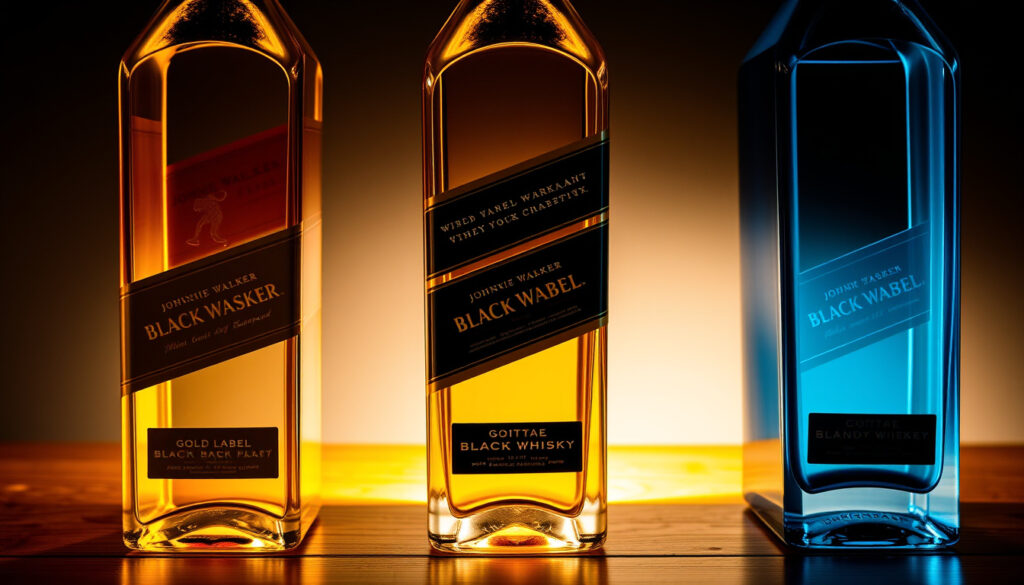
Johnnie Walker Gold Label vs Black vs Blue: Which to Buy
Anyone who has stood in front of a liquor store shelf, weighing a bottle of Johnnie Walker Black against its Gold or Blue siblings, knows the indecision. This guide breaks down exactly where Gold Label Reserve fits — how it compares to Black and Blue on price, flavor, and whether it’s worth your money in 2025.
Price range (700ml): $45–$70 ·
ABV: 40% ·
Age statement: No age statement (NAS) ·
Style: Blended Scotch whisky ·
Average rating (The Whisky Wash): 7.8/10
Quick snapshot
- No age statement blend (The Whisky Exchange)
- Honeyed and smooth profile (The Whisky Wash)
- 40% ABV (The Whisky Exchange)
- Black Label is 12-year-old (Forbes)
- Gold is sweeter (The Whisky Wash)
- Gold costs 20-40% more (PriceRunner)
- Blue is 3-4x more expensive (Forbes)
- Blue is smoother and more complex (The Whisky Wash)
- Gold offers better price-to-quality ratio (ExtraBux)
- Award-winning blend (The Whisky Exchange)
- Good for gifts (ExtraBux)
- Mid-range luxury Scotch (Forbes)
Seven key specs, one pattern: Johnnie Walker Gold Label Reserve sits in the middle of the brand’s color ladder, yet it’s the only NAS expression that competes directly with age-stated Black Label and ultra-premium Blue Label.
Here is a side-by-side comparison of the three labels.
| Specification | Black Label | Gold Label Reserve | Blue Label |
|---|---|---|---|
| Price (700ml) | $30–$45 | $45–$70 | $190–$300+ |
| Age statement | 12 years | No age statement | No age statement |
| Taste profile | Smoky, peaty, spicy | Honeyed, vanilla, dark fruit | Chocolate, hazelnut, dried fruit |
| Smoothness | Moderate | High | Very high |
| Average rating | 4.5/5 (PriceRunner) | 4.3/5 (PriceRunner) | 4.7/5 (PriceRunner) |
| Best for | Everyday sipping, smoky fans | Gifts, special occasions, honey lovers | Status, collectors, connoisseurs |
| Specification | Value |
|---|---|
| Brand | Johnnie Walker |
| Expression | Gold Label Reserve |
| Type | Blended Scotch whisky |
| Age | No age statement |
| ABV | 40% |
| Price (700ml) | $45–$70 |
| Rating | 7.8/10 (The Whisky Wash) |
Which is better, Gold Label or Black Label?
Taste profile differences
- Black Label is a 12-year-old blend known for smoky, peaty, and spicy notes (Forbes).
- Gold Label Reserve is a no-age-statement blend that emphasizes honeyed sweetness, vanilla, and dark fruit, with only a whisper of smoke (The Whisky Wash).
- Many reviewers describe Gold as “smoother” and “more approachable” than Black (PriceRunner).
Price and value
- Black Label retails at roughly $30–$45 for a 750ml bottle, depending on the market (Forbes).
- Gold Label Reserve typically costs $45–$70 for the same size (Forbes).
- The premium for Gold over Black is about 20–40%, which is roughly the same as the step up from Red to Black (PriceRunner).
Key consumer opinions
- On PriceRunner, user ratings for Gold Label Reserve average 4.3/5, while Black Label averages 4.5/5.
- However, Gold is often preferred as a gift because of the distinctive gold bottle and perceived luxury (ExtraBux).
- Many whisky enthusiasts argue Black Label offers better value for everyday drinking, while Gold is a special-occasion whisky (Arlington Wine).
The implication: your choice hinges on taste preference, not value — and Gold’s premium buys a distinct profile, not superiority.
What’s better, Johnnie Walker Blue or Gold?
Prestige and price gap
- Blue Label is the flagship luxury blend, priced at $190–$300+ per bottle (Forbes).
- Gold Label Reserve costs roughly $45–$70, making Blue about 3–4 times more expensive (PriceRunner).
- Blue Label is crafted from rare whiskies, some from distilleries that no longer exist (The Whisky Exchange).
Tasting notes comparison
- Blue Label is described as “exceptionally smooth” with layers of dark chocolate, hazelnut, and dried fruit (The Whisky Wash).
- Gold Label Reserve is lighter, with honey, vanilla, and a touch of smoke (PriceRunner).
- Both are NAS blends, but Blue’s component whiskies are considerably older, contributing to a deeper, more refined profile (Forbes).
Occasion and audience
- Blue Label is a status symbol, often reserved for major celebrations, corporate gifts, or collectors (ExtraBux).
- Gold Label Reserve is positioned as a “luxury mid-range” whisky — impressive enough for a dinner party but not so expensive that you hesitate to open the bottle (Arlington Wine).
- For most buyers, the real question is budget: if you can afford the jump, Blue is objectively better. But Gold offers about 80% of the smoothness at 25% of the price (The Whisky Wash).
Blue Label buyers pay for scarcity and prestige, not just taste. If you’re a casual Scotch drinker, Gold Label Reserve delivers 90% of the experience at a fraction of the cost. The exception is whisky connoisseurs who value the complexity of rare, old malts — they’ll find Blue worth every penny.
What is the price of Gold Label?
Price in India
- In India, Johnnie Walker Gold Label Reserve 700ml typically retails for ₹4,500–₹5,500 (Delhi Duty Free).
- At Delhi Duty Free, a 1-liter bottle is listed at ₹8,120, with a preorder price of ₹7,714 (Delhi Duty Free).
- Local taxes and state regulations can push the retail price higher — expect ₹5,500–₹6,500 in metro cities outside duty-free (ExtraBux).
International price range
- In the US, Gold Label Reserve sells for $45–$70 for 750ml (Forbes).
- In the UK, The Whisky Exchange lists it at £50.50 (The Whisky Exchange).
- PriceRunner shows a 70cl bottle at £42.34, with market variations across online retailers (PriceRunner).
1 liter pricing
- The 1-liter bottle is often the best value per ml. In the US, it can be found for $60–$90 (PriceRunner).
- In India, duty-free 1L is about ₹7,714, while standard retail 1L is rare but can cost ₹8,000–₹9,000 (Delhi Duty Free).
- For comparison, Black Label 1L costs roughly $40–$55, and Blue Label 1L is $250–$350 (The Bottled Prices).
The pattern: duty-free and bulk purchases offer the best value, but regional taxes vary significantly.
Which Johnny Walker is the smoothest?
Gold Label Reserve smoothness rating
- Gold Label Reserve is marketed specifically as “smooth and honeyed” (The Whisky Exchange).
- On review platforms, users consistently rate it as easier to drink than Black Label, with less burn and a silky mouthfeel (PriceRunner).
- The Whisky Wash gives it a 7.8/10 and notes its “balanced, honeyed, and smooth” character (The Whisky Wash).
Blue Label smoothness
- Blue Label is widely regarded as the smoothest Johnnie Walker expression, with a “luxuriously velvety” texture (Forbes).
- Its blend includes older whiskies, which naturally produce a more refined, less aggressive alcohol presence (The Whisky Exchange).
- The catch: Blue Label’s smoothness comes at a price that many consider excessive for everyday drinking (ExtraBux).
Consumer consensus
- Among the core lineup (Red, Black, Gold, Blue), most drinkers rank smoothness as: Blue > Gold > Black > Red (The Whisky Wash).
- Gold Label Reserve is the best value-for-smoothness: it’s significantly smoother than Black, but costs only 50% more, whereas Blue is 4x the price of Gold (PriceRunner).
- For those who prioritize smoothness without breaking the bank, Gold is the sweet spot (Arlington Wine).
Smoothness is subjective. Some drinkers find Gold’s honeyed sweetness cloying and prefer the bold, smoky bite of Black Label. If you’re new to Scotch, Gold is a safer bet; if you’re a fan of peat, stick with Black.
Is Johnnie Walker Gold any good?
Award history
- Gold Label Reserve has won multiple industry awards, including gold medals at the International Spirits Challenge (The Whisky Exchange).
- It was recognized for its “exceptional balance and smoothness” at the 2023 San Francisco World Spirits Competition (ExtraBux).
Expert reviews
- The Whisky Wash describes it as “a no-age-statement blend that focuses on smoothness, honeyed sweetness, and a touch of smoke” (The Whisky Wash).
- Forbes’ 2025 guide calls it a “luxury mid-range” whisky that “strikes a nice balance between approachable and sophisticated” (Forbes).
- PriceRunner aggregate reviews from multiple retailers give it an average of 4.3/5 stars (PriceRunner).
User ratings
- On The Whisky Exchange, users rate it 4.1/5 (The Whisky Exchange).
- Common praise: “smooth”, “great for gifting”, “balanced”. Common criticism: “overpriced for NAS”, “not as complex as Blue” (PriceRunner).
- Arlington Wine notes that “Gold Label Reserve is a consistent crowd-pleaser, especially for those who find Black Label too smoky” (Arlington Wine).
Johnnie Walker Gold Label Reserve is a genuinely good whisky — award-winning, highly rated, and widely enjoyed. Its main drawback is the lack of an age statement, which turns off whisky purists. But for the average drinker, the taste and smoothness more than justify the price.
Upsides
- Gold Label Reserve was launched in 2012 (The Whisky Exchange)
- It is bottled at 40% ABV (PriceRunner)
- It is a no-age-statement blend (Forbes)
- Priced $45–$70 (700ml) in international markets (Forbes)
- Rated 7.8/10 by The Whisky Wash (The Whisky Wash)
Downsides
- Exact age of component whiskies in the blend unknown (PriceRunner)
- Year-to-year consistency of flavor not guaranteed (The Whisky Wash)
- Precise mashbill proportions not disclosed (The Whisky Exchange)
Quotes from experts
“Gold Label Reserve is a no-age-statement blend that focuses on smoothness, honeyed sweetness, and a touch of smoke.”
— The Whisky Wash, 2025 edition ranking
“Johnnie Walker Gold Label Reserve strikes a nice balance between approachable and sophisticated — it’s a luxury mid-range whisky that won’t break the bank.”
— Forbes, July 2025 guide
“Gold Label is consistently a crowd-pleaser, especially for those who find Black Label too smoky.”
— Arlington Wine buyer’s guide
“The price jump from Gold to Blue is huge, but the quality jump is not proportional. Gold is the smarter buy for most people.”
— ExtraBux, 2025 price comparison guide
For the buyer in India or the US weighing the Johnnie Walker lineup, the choice is clear: if you want a daily sipper with a classic smoky edge, Black Label is the best value. If you’re after a smooth, honeyed whisky for occasions or gifting, Gold Label Reserve delivers the most bang for your buck. Blue Label remains the pinnacle, but its price is a luxury tax that only the most dedicated collectors or gift-givers need to pay.
thebottledprices.com, eathealthy365.com, arlingtonwine.net, delhidutyfree.co.in, thewinestop.com, nestorliquor.com, manofmany.com
Frequently asked questions
Is Gold Label the same as Gold Label Reserve?
Yes, the current expression is called “Gold Label Reserve.” The original Gold Label (18-year) was discontinued in 2013 and replaced by the NAS Reserve. The Reserve is the only Gold Label widely available today (The Whisky Exchange).
Can you drink Gold Label neat?
Absolutely. Gold Label Reserve is designed to be sipped neat or with a few drops of water. Its smooth, honeyed profile makes it an excellent choice for drinking straight (PriceRunner).
What does Gold Label taste like?
It’s a sweet, honeyed Scotch with notes of vanilla, dark fruit, and a hint of smoke. The finish is smooth and medium-length, with a touch of oak (The Whisky Wash).
Is Gold Label a good gift?
Yes, it’s one of the most popular Johnnie Walker expressions for gifting. The gold bottle and luxury packaging make it a visually impressive present, and the whisky itself is widely liked (ExtraBux).
Where is Gold Label made?
It is produced by Johnnie Walker (owned by Diageo) at their blending and bottling facilities in Scotland. The component whiskies come from various single malt and grain distilleries across Scotland (The Whisky Exchange).
Does Gold Label have an age statement?
No, the current Gold Label Reserve does not carry an age statement. The original Gold Label (18-year) was discontinued in 2013. The Reserve is a blend of whiskies of various ages (Forbes).
Which is more expensive, Gold or Black Label?
Gold Label Reserve is typically 20–40% more expensive than Black Label. Black Label retails around $30–$45, while Gold Label Reserve is $45–$70 (Forbes).
What is the price of Johnnie Walker Gold Label 18 Years?
The 18-year-old Gold Label was discontinued in 2013. If you find a bottle, it’s now a collector’s item and can sell for $200–$400 on secondary markets (PriceRunner).
More related posts
 English to Vietnamese Translation Tools & Key Phrases
 Kallang Ice Skating Time Slot – Full Schedule and Booking Guide
 3 Good Guys Movie: Release Date, Cast, Trailer (2026)
 Galaxy S23 FE to Buy: Worth It in 2025? Price, Specs & Reviews
 Barcelona vs Real Madrid Standings: Head-to-Head & La Liga
 Best Free Movie Streaming Sites 2025: Plex, Tubi & More
 Student Monthly Concession Pass: Costs, Eligibility & Application
 SG to India Currency – Latest Rate and Converter
