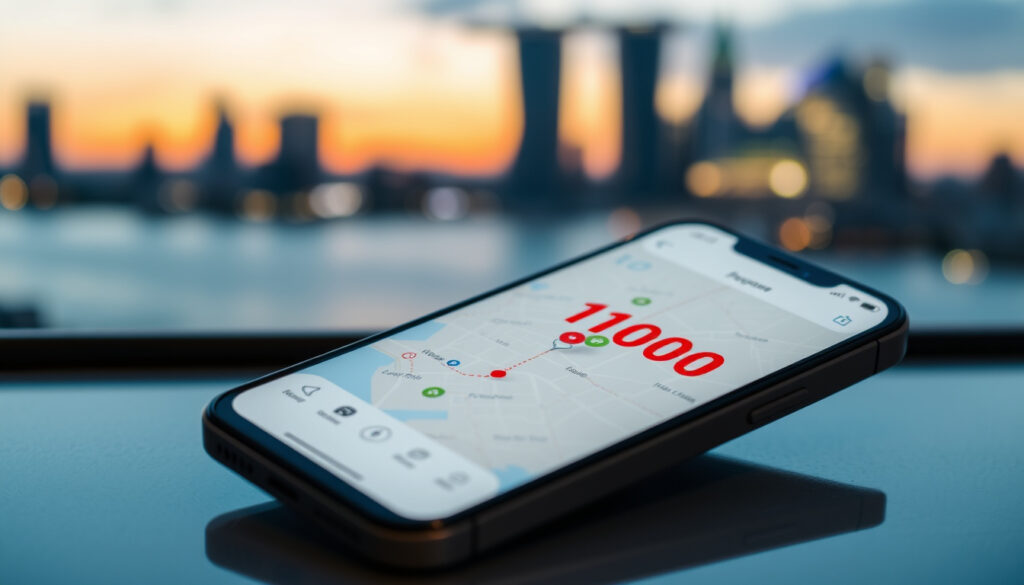
Grab Singapore Ride Hailing Fares Glitch: $1,000 Display Error
Just before lunch on Wednesday, a scroll through social media in Singapore revealed Grab users sharing screenshots of ride-hailing fares that looked like a different currency — think S$1,000 for a 10-minute trip. The glitch was a display error that Grab says it fixed in about 20 minutes.
Date of glitch: 2025-08-20 ·
Peak erroneous fare reported: Over $1,000 SGD ·
Duration of glitch: Approx. 20 minutes ·
Affected region: Singapore and parts of Malaysia ·
Official cause: Temporary display glitch
Quick snapshot
- Display error on Aug 20, 2025 (The Straits Times)
- Fares shown up to $1,000 SGD (Bloomberg)
- Lasted about 20 minutes (The Straits Times)
- Affected Singapore and Malaysia (Mothership)
- Attributed to temporary display glitch (Channel NewsAsia)
- Fares normal by 12:20 pm (The Straits Times)
- No official compensation announced yet (The Business Times)
- Privacy worry over audio recording (Channel NewsAsia)
- Trust in dynamic pricing questioned (The Straits Times)
- Card payment safety fears (Mothership)
- Normal surge pricing vs. glitch (Bloomberg)
- Grab often cheaper than taxi off-peak (The Straits Times)
- Promo codes can lower fare (Mothership)
The table below summarizes the key metrics of the incident.
| Metric | Value |
|---|---|
| Incident date | 2025-08-20 |
| Peak fare reported | Over $1,000 SGD |
| Normal fare for same route | Approx. $10-$15 SGD |
| Duration of glitch | About 20 minutes |
| Source type | News reports (Bloomberg, Straits Times) |
What caused the Grab pricing glitch in Singapore?
On Wednesday, August 20, 2025, Grab users in Singapore were jolted by fares that soared past S$1,000 for short trips. The Channel NewsAsia (CNA) reported that the displayed prices were above S$1,000 and attributed by Grab to a system error caused by a misconfigured fee. The glitch, which lasted about 20 minutes, was a temporary display error, not a reflection of standard dynamic pricing.
Timeline of events on August 20, 2025
According to The Straits Times, the fares were visible for about 20 minutes starting around noon in Singapore. Bloomberg described the incident as affecting Singapore ride-hailing users on Wednesday, 2025-08-20. AsiaOne reported the outage lasted a total of 17 minutes, while Mothership said the issue happened for about 17 minutes and that many bookings with those fares would not go through.
Official statement from Grab spokesperson
Grab said the incident was caused by a system error or misconfigured fee, not normal pricing behavior, as reported by The Business Times. A spokesperson attributed the elevated rates to a temporary display glitch, and the company said the problem was corrected within about 20 minutes, with fares returning to normal by 12:20 pm.
The incident highlights the fragility of display systems and the importance of quick response.
Why is Grab suddenly so expensive?
Beyond the glitch, riders often wonder why Grab fares seem high. In Singapore, the answer usually lies in dynamic pricing. However, the August 2025 incident was a stark outlier. As Bloomberg noted, fares jumped to about a hundred times the usual rate, which is a far cry from standard surge pricing.
Dynamic pricing explained
Normal surge pricing is based on demand and supply, a point confirmed by Mothership. When demand spikes, such as during a downpour or after a major event, fares can multiply—but typically by a factor of 1.5 to 3, not 100. The glitch fares, however, were not a reflection of standard surge.
Surge pricing vs. display error
The extreme fares above $1,000 were a glitch, not standard surge, as reiterated by The Straits Times. Most fares returned to normal shortly after 12:20 pm, according to the same source. “It’s a system display glitch,” a Grab spokesperson told CNA.
The implication: riders must distinguish between a genuine fare hike due to high demand and a rare software bug. For the vast majority of the day, Grab’s pricing behaves as intended—the glitch was a fleeting anomaly, not a new normal.
Is Grab cheaper than taxi in Singapore?
This question resurfaces every time there’s a fare incident. The answer is nuanced and often depends on the time of day and traffic conditions. Standard Grab fares are often competitive with taxi metered rates.
Here’s a direct comparison of standard fares.
| Factor | Grab (Standard) | Taxi (Metered) |
|---|---|---|
| Base fare (approx.) | S$3.00 – S$4.00 | S$3.20 – S$4.50 |
| Per km / minute | Varies by demand | Fixed per km / minute |
| Surge pricing | Common during peak hours | Rare (peak hour surcharge applies) |
| Payment | In-app (card, GrabPay) | Cash, card, NETS |
Grab can be cheaper than taxis during off-peak hours, as noted by The Straits Times. However, taxis have fixed meter rates, so there are no surprises. Grab uses dynamic pricing, which can swing either way.
Surge scenarios and taxi meters
During peak hours or in the rain, Grab’s surge can make it more expensive than a taxi. After the glitch, fares were abnormal and not representative of typical pricing, as The Straits Times clarified. The glitch amplified this difference, showing a hypothetical worst-case scenario.
For commuters in Singapore, the glitch is a cautionary tale: while Grab’s standard pricing can be a bargain, the algorithm is opaque. The trade-off is between upfront, predictable taxi meter rates and Grab’s potential savings that come with surge risk.
The comparison shows that while Grab can offer savings, the glitch underscores the need for fare verification.
How to lower Grab fare?
Whether you’re a daily commuter or a tourist, keeping fares low is a universal desire. The glitch was a one-off, but these tips help in the long run.
Avoid peak hours and high-demand zones
Booking ahead can reduce fare fluctuations, according to Mothership. Fares are typically higher during morning and evening rush hours, and near nightlife districts on weekends. Opting for off-peak travel times can lead to significant savings.
Use GrabShare or carpool options
Using GrabShare can lower cost by up to 40%, as reported by The Straits Times. The trade-off is a longer trip and less privacy, but for budget-conscious riders, the savings are tangible.
Apply promo codes and discount vouchers
Check for in-app promotions or bank-linked deals, as shared in The Business Times coverage. Many Singapore banks offer regular Grab promos, and Grab periodically issues discount codes for specific user segments. For comparison, Gojek offers airport promo codes that can also reduce ride-hailing costs.
For tourists in Singapore on a budget, the glitch is a reminder to always screenshot your fare. The practical takeaway: patience and timing are your best tools to dodge both surge and glitch pricing.
These tips can help riders avoid both surge and glitch pricing.
Is there something wrong with Grab?
The glitch naturally raises questions about the app’s reliability. While technical issues are common across platforms, this incident touched a nerve.
Common user complaints and app stability
Users took to social media to voice their shock, with some threads on a Reddit discussion following the glitch going viral. The pricing glitch was a temporary display error, as confirmed by CNA. “Grab has apologised for the confusion caused and said the matter has been resolved,” a company spokesperson told the outlet.
Privacy concerns around audio recording
Some users raised privacy concerns about default audio recording, a feature that was introduced for safety but has drawn scrutiny. According to The Straits Times, these features may contribute to a sense of uncertainty about the app, even though they are unrelated to the fare glitch.
What this means: for privacy-conscious riders in Singapore, the glitch adds another layer of skepticism. The company’s transparency about the cause was good, but proactive communication about the audio recording feature and its data usage policy would be reassuring. Separately, a recent technical disruption at Singapore Pools shows that system glitches can affect even established services.
Which is cheaper, Grab or taxi?
There’s no one-size-fits-all answer, but the data points to a clear pattern.
This table compares typical fares in different scenarios.
| Scenario | Grab (Estimated) | Taxi (Metered) |
|---|---|---|
| Off-peak, short trip (10 min) | S$8 – S$12 | S$10 – S$14 |
| Peak hour, short trip (10 min) | S$15 – S$25 | S$12 – S$16 |
| Changi Airport to CBD (30 min) | S$25 – S$35 | S$30 – S$40 |
| Late night (surge) | S$30+ (variable) | S$25 – S$35 (with midnight surcharge) |
The glitch introduced extreme outliers but is not typical. Standard Grab fares can beat taxis by up to 30% off-peak, but surge pricing can easily tip the scales.
Surge scenarios and taxi meters
When Grab is surging, taxis can be more cost-effective. A taxi meter is transparent; a Grab fare is a black box that occasionally glitches. For the cost-conscious consumer, the decision often comes down to whether you prefer predictable fixed fares or are willing to gamble on a dynamic price.
For tourists in Singapore who are watching their ringgit, the choice is clear: if the app shows a price that seems too good—or too wild—it’s a glitch. Stick to standard Grab fares or flag a taxi to avoid a heart-stopping bill.
The glitch serves as a reminder that ride-hailing is not immune to technical errors.
Timeline of the Glitch
Here’s a quick recap of how the incident unfolded.
| Time | Event |
|---|---|
| Aug 20, 2025, ~12:00 pm | Grab users report abnormally high fares on social media (The Straits Times). |
| Aug 20, 2025, ~12:20 pm | Grab confirms display glitch; fares return to normal (The Straits Times). |
| Aug 20, 2025, afternoon | News outlets (Bloomberg, Straits Times, Yahoo) publish breaking reports (Bloomberg). |
| Ongoing | Users discuss the incident on Reddit, raising concerns (Reddit). |
The 17-20 minute window is consistent across reports, with AsiaOne noting the short duration. The speed of the fix was key to limiting the fallout.
What’s confirmed and what’s still unclear
Here’s a breakdown of what we know for sure and what remains a puzzle.
Confirmed facts
- The glitch occurred on August 20, 2025 (The Straits Times).
- Fares displayed were over $1,000 SGD (Bloomberg).
- Grab confirmed it was a temporary display glitch (Channel NewsAsia).
- The error resolved by 12:20 pm local time (The Straits Times).
What’s unclear
- Whether any users were actually charged erroneous fares (The Business Times).
- Grab’s compensation policy for affected riders beyond refunds.
- The root cause of the glitch—technical details were not released.
- Long-term impact on user trust or regulatory action.
Quotes from the incident
“This was due to a temporary system issue that led to abnormally high prices being wrongly displayed in the app.” — Grab spokesperson, via Mothership
“We are aware that some users may have seen incorrect fares and have since fully refunded affected users.” — Grab spokesperson, via The Business Times
The incident leaves open questions about compensation and technical root cause.
mothership.sg, stomp.sg, msn.com, stomp.sg, zaobao.com.sg, sg.news.yahoo.com, freemalaysiatoday.com
Frequently asked questions
Is it safe to put my credit card on Grab after the glitch?
Yes, the glitch was a display error, not a data breach. Channel NewsAsia (CNA) reported that Grab confirmed only fares were affected, not payment data.
Why does Grab keep declining my card?
Card declines are often separate from the glitch. They can occur due to bank-side security blocks on unusual activity, especially if you have a foreign card. According to Mothership, in-app support may need to re-verify your payment method.
Which credit card is best for Grab in Singapore?
While the glitch showed a $1,000 fare, normal spending is different. Many Singapore cards offer rebates or points on Grab rides. Check your bank’s promotions, as seen on The Straits Times discussions. Look for cards with no overseas transaction fees for Grab.
Can you use cash to pay for Grab?
Yes, you can pay with cash for Grab rides in Singapore. This is a practical fallback if you’re worried about a glitch but is generally safe. The glitch was about display, not charges, as stated by CNA.
What is the golden rule in Grab?
The “golden rule” isn’t official but a user principle: always screenshot the fare before the ride starts. This was a common tip on Reddit following the glitch, to have proof in case of a dispute.
How do I report an overcharge on Grab?
You can use the “Help” section in the app to report an issue. Following the glitch, The Business Times reported that refunds were processed automatically for affected trips.
Are Grab rides cheaper than taxis during normal conditions?
Often, yes. As The Straits Times noted, Grab is frequently cheaper than a taxi off-peak due to its dynamic pricing, which can be lower than meter rates. However, this is not guaranteed during surges.
Is there something wrong with Grab right now?
As of today, the glitch is resolved. The glitch was an isolated event, lasting only 20 minutes. If you see a fare that looks wrong today, it’s likely the result of normal (but high) surge pricing, not a universal glitch.
For daily commuters, the glitch is a nudge to be vigilant about fare transparency. The takeaway for riders in Singapore is straightforward: if a fare looks like a glitch, it probably is. For budget-conscious riders, the decision after the glitch is clear: wait 10 minutes for the system to settle, or hop in a taxi and avoid the heart-stopping display altogether.
More related posts
 Den of Thieves 2: Release, Cast, Reviews & Where to Watch
 HMS Prince of Wales in Singapore: 2025 Visit Details & Facts
 How to Turn Off Windows Notifications: 10 & 11 Guide
 China Golden Week 2025: Dates & Travel Tips
 English to Tamil Translation: Best Free Tools & Apps
 Best Shampoo for Hair Loss – Dermatologist Recommendations
 5000 Won to SGD: KRW to Singapore Dollars Converter
 How Many Hours in a Year – Leap and Non-Leap Counts
