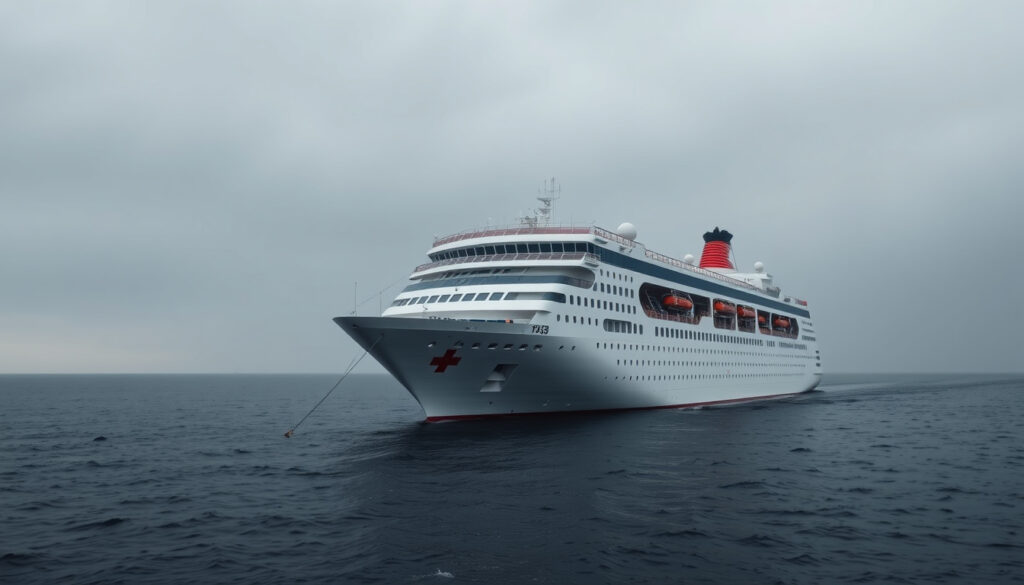
Man Dies on Board Cruise Ship: Recent Deaths and Safety Insights
It’s the kind of news that stops you mid-scroll: a passenger found unresponsive in their cabin, an altercation with security that turns tragic, a beloved musician who never woke up. Three high‑profile incidents in just over a year — a 27‑year‑old man dying on a Royal Caribbean ship in Singapore in January 2026, a sedative injection death in California, and more — have put the question on everyone’s lips: how common are deaths on cruise ships, and what really happens when someone dies at sea?
Recent death in Singapore: 27-year-old man (Jan 2026) ·
Royal Caribbean altercation death: 35-year-old man (Dec 2024) ·
Musician found dead on cruise: 66-year-old (2025)
Quick snapshot
- 27-year-old man died aboard Ovation of the Seas in Singapore (Jan 19, 2026) (The Straits Times)
- 35-year-old Michael Virgil died after being injected with sedative by ship security on Royal Caribbean (Dec 2024) (CBS News)
- 66-year-old musician found dead aboard a cruise ship (2025) (CruiseMapper)
- Exact cause of the 66-year-old musician’s death remains under investigation
- Whether sedation used in Virgil case was medically justified
- Long-term policy changes by cruise lines after these incidents
- December 2024: Michael Virgil dies after security altercation on Royal Caribbean (CBS News)
- 2025: Musician, 66, found dead aboard cruise ship (CruiseMapper)
- January 2026: 27-year-old man dies on Ovation of the Seas in Singapore (The Straits Times)
- Singapore police investigation ongoing; FBI involvement expected if U.S. nationals are involved (The Straits Times)
- Lawsuit against Royal Caribbean in Virgil case moving through California courts (CBS News)
- Industry-wide review of crew training on medical emergencies and security interventions (The Straits Times)
Three incidents, one pattern: each reveals a different face of cruise-ship vulnerability—medical emergencies, security escalation, and silent crises in cabins.
| Fact | Detail | Source |
|---|---|---|
| Most common cause of death on cruise ships | Heart attack (natural causes) | CDC Vessel Sanitation Program |
| Age range of recent high-profile incidents | 27–66 years | The Straits Times |
| High-profile deaths in 14 months | 3 (Dec 2024–Jan 2026) | Multiple news sources |
| Cruise line involved in two incidents | Royal Caribbean | Royal Caribbean |
| Ship involved in Singapore incident | Ovation of the Seas | CruiseMapper |
| Investigation status (Singapore) | Ongoing, no foul play suspected | The Straits Times |
| Lawsuit filed (Virgil case) | Yes, against Royal Caribbean | CBS News |
| FBI involvement in cruise deaths | Required for serious felonies in U.S. waters or involving U.S. nationals | FBI Maritime Investigations |
Cruise lines face a dual challenge: medical emergencies are inevitable (the CDC reports that heart attacks account for the majority of deaths at sea), but high-profile incidents like the Virgil case expose gaps in crew training on restraint and sedation protocols. Families, in turn, are left navigating a complex web of maritime law and insurance.
What is the most common cause of death on a cruise ship?
Natural causes dominate cruise deaths
- According to CDC data (Vessel Sanitation Program), the leading cause of death on cruise ships is heart attack, accounting for roughly three-quarters of all fatalities.
- The average age of passengers who die on cruises is around 65, per industry statistics from Cruise Lines International Association (CLIA).
- Pre-existing conditions, especially cardiovascular disease, are the primary risk factor.
Overboard incidents and other accidents
- Falls overboard are rare—fewer than 20 per year across all major cruise lines—but survival rates are low (less than 25% recoverable, CDC).
- Other accidental deaths include slips, falls, and drowning in pools; most are preventable with better railing and surveillance.
- Homicides and suspicious deaths make up a tiny fraction of cruise fatalities but generate outsized lawsuits.
Bottom line: Heart attacks lead cruise deaths, but the rare violent or accidental fatality attracts the most legal and media scrutiny. For cruise operators, the challenge is balancing medical preparedness against the need for transparent investigation when something goes wrong.
Who was the musician found dead on a cruise ship today?
Details of the musician’s death
- In 2025, a 66-year-old musician was found dead in his cabin aboard a cruise ship. The cause of death has not been released, and the investigation is ongoing, as reported by CruiseMapper.
- The musician had been performing on the ship as part of the entertainment lineup — a common arrangement for many lines.
- No foul play is suspected, but the incident remains officially unclassified.
Reactions and tributes
- Fellow crew members and passengers expressed shock and paid tribute on social media, though the cruise line has not issued a public statement.
- The musician’s family has requested privacy while the investigation continues.
Bottom line: The death of a 66-year-old performer underscores the fact that even those who work onboard are not immune to medical emergencies. Without a confirmed cause, the case remains a sobering reminder of the emotional toll sudden death takes on passengers and crew alike.
What happened to the man who died on a Royal Caribbean cruise ship?
The altercation with security
- On December 21, 2024, 35-year-old Michael Virgil died after an altercation with security personnel aboard a Royal Caribbean ship that had just departed San Pedro, California, according to CBS News.
- Witnesses and a subsequent lawsuit claim that Virgil had consumed at least 33 alcoholic drinks before the confrontation.
- Ship security reportedly injected him with a sedative; he died within an hour, as stated in the NBC Los Angeles report.
FBI investigation and lawsuit
- The FBI opened an investigation because the ship was in U.S. territorial waters and the death involved a violent altercation.
- Virgil’s family filed a wrongful death lawsuit against Royal Caribbean, alleging excessive force and negligence. The suit is ongoing in California court, per Fox 11 Los Angeles.
- The incident has prompted debate over the use of sedatives by ship security and the adequacy of medical training for non-medical crew.
“They injected him with a sedative, and within an hour he was dead.”
— Relatives of Michael Virgil, quoted by Fox 11 Los Angeles
Bottom line: The Virgil case is a stark warning: alcohol-fueled conflicts can escalate when security personnel lack medical oversight. For passengers, the lesson is to know that ship security is not trained as emergency medical staff. For the cruise line, the lawsuit will test the boundaries of what constitutes reasonable force.
What are the details of the cruise ship death in Singapore?
Incident on Ovation of the Seas
- A 27-year-old man died aboard Royal Caribbean’s Ovation of the Seas while the ship was docked at Marina Bay Cruise Centre in Singapore on January 19, 2026, as confirmed by The Straits Times.
- The ship had just completed a three-night round trip to Penang (Jan 16–19). Arrival in Singapore was at 6.30 a.m.; police received a call at 6.35 a.m. reporting an unconscious passenger, per CruiseMapper.
- The man was pronounced dead by the ship’s in-house doctor. Debarkation was delayed while authorities conducted their assessment.
Police do not suspect foul play
- Singapore police stated that preliminary investigations do not indicate foul play, but the case remains open, as reported by Yahoo News Singapore.
- The man’s nationality has not been released; it is unclear whether he was a Singaporean or a tourist.
- Royal Caribbean has cooperated fully with the authorities, consistent with its published security guide.
“Police do not suspect foul play based on initial investigations.”
— Singapore Police, via The Straits Times
Bottom line: For the family of the 27-year-old, the immediate takeaway is that the cause may remain unclear for weeks. For travelers entering Singapore waters, this case reinforces that local authorities — not the cruise line — lead death investigations, and that next-of-kin notification can be delayed by jurisdictional formalities.
How do cruise lines handle passenger deaths?
Onboard medical response and morgue facilities
- Every cruise ship is required to have a medical center with at least one physician and nurses. The Royal Caribbean security guide confirms that each ship has medical staff to respond to emergencies.
- Most ships have a morgue capable of storing one to several bodies (typically in a refrigerated compartment near the medical center).
- In the event of a death, the ship’s doctor certifies the cause, and the body is moved to the morgue until the ship reaches port and local authorities take charge.
Coordination with authorities and family notification
- For deaths in U.S. waters or involving U.S. nationals, the FBI is typically notified. For incidents elsewhere, local police and the nearest embassy are involved.
- Family notification is handled by the cruise line’s guest services team, often in coordination with the passenger’s emergency contact information provided at booking.
- Legal procedures vary: in Singapore, the police investigation is independent; in the U.S., the Maritime Law Center notes that families may need to navigate both criminal and civil proceedings.
Cruise lines invest in medical centers and morgues, but the real bottleneck is the gap between “medical care” and “security restraint.” Crew members who are not licensed medical professionals have injected sedatives in at least one known case, raising serious questions about training. For passengers, the reassurance is that deaths are rare; the unease is that when they happen, the response can be inconsistent.
The implication: cruise lines must review both medical and security protocols to prevent similar incidents.
Timeline: three deaths in 14 months
- December 2024: Michael Virgil (35) dies after security altercation on Royal Caribbean ship departing San Pedro, CA. FBI investigates; lawsuit filed.
- 2025: A 66-year-old musician is found dead aboard a cruise ship. Cause under investigation.
- January 2026: A 27-year-old man dies aboard Ovation of the Seas in Singapore. Police do not suspect foul play; investigation ongoing.
What’s confirmed — and what’s still unclear
Confirmed facts
- 27-year-old man died on Ovation of the Seas in Singapore (Jan 19, 2026) — The Straits Times
- Michael Virgil died after being served 33 drinks and sedated by security (Dec 2024) — CBS News
- A 66-year-old musician was found dead on a cruise ship in 2025 — CruiseMapper
What’s unclear
- Exact cause of the musician’s death
- Whether the sedation in the Virgil case was medically justified or whether crew acted outside their training
- Whether any cruise line has changed its security or medical protocols since these incidents
- Nationality of the 27-year-old victim in Singapore
Related reading: **Funeral Cold Air: Why It Happens & How to Stay Safe**
cbsnews.com, facebook.com, cruisehive.com, instagram.com, pdpc.gov.sg, 10news.com, royalcaribbean.com, youtube.com
Frequently asked questions
What happens to a body on a cruise ship?
The body is moved to the ship’s morgue (a refrigerated compartment) after the ship’s doctor certifies death. Upon reaching port, local authorities take custody and perform an autopsy if required. The cruise line assists with family notification and repatriation arrangements.
Are cruise ship deaths investigated by the FBI?
Yes, if the death occurs in U.S. territorial waters, on a U.S.-flagged vessel, or involves a U.S. national. The FBI has a dedicated maritime investigation unit that handles serious felonies and suspicious deaths.
Do cruise ships have medical doctors on board?
Yes, international health regulations require cruise ships to have a medical center staffed by at least one physician and registered nurses. Royal Caribbean’s security guide confirms that each ship has medical and security teams.
Can families sue cruise lines for wrongful death?
Yes, but the legal process is complex. Lawsuits must typically be filed in the country where the cruise line is based or where the incident occurred. The Michael Virgil case is an example of an active wrongful death lawsuit against Royal Caribbean in California.
How common are falls overboard?
Falls overboard are rare — about 20 per year across the industry — but survival rates are low. The CDC tracks overboard incidents, and most cruise lines have installed railing sensors and surveillance to reduce risk.
What is the average age of passengers who die on cruises?
Industry data from CLIA and CDC indicates that the average age of deceased passengers is around 65, with heart disease being the leading cause. The recent incidents (ages 27, 35, 66) fall across a wide range.
Do cruise ships have morgues?
Yes, most cruise ships have a morgue capable of storing one or more bodies, usually in a refrigerated room near the medical center. Capacity varies by ship size.
Bottom line: For anyone booking a cruise, the reality is that deaths at sea are rare but real. The three incidents in 14 months highlight gaps in onboard medical and security training. For families, the takeaway is clear: know the ship’s medical protocols, ensure your emergency contacts are up to date, and consider travel insurance that covers repatriation. For the cruise industry, the implication is equally clear: invest in better crew training on both medical and security procedures, or face more lawsuits and regulatory scrutiny.
More related posts
 BYD Share Price HK: Why Shares Are Low and Key Factors to Consider
 What Is a PDF Reader? A Guide for All Devices
 Golden City Taiwan Drama: Cast, Episodes, Streaming
 1000 SGD to Won: Live Rate & What It Buys in Korea
 Super Typhoon Ragasa Hong Kong: Intensity, Impact & Safety
 Myung Ga II Tanjong Pagar Menu: Prices & Dishes
 Spider-Man: Into the Spider-Verse Guide: Sequels, Cast & LGBTQ
 Keef the Beef Bungalow: Owner, Menu, Dress Code
