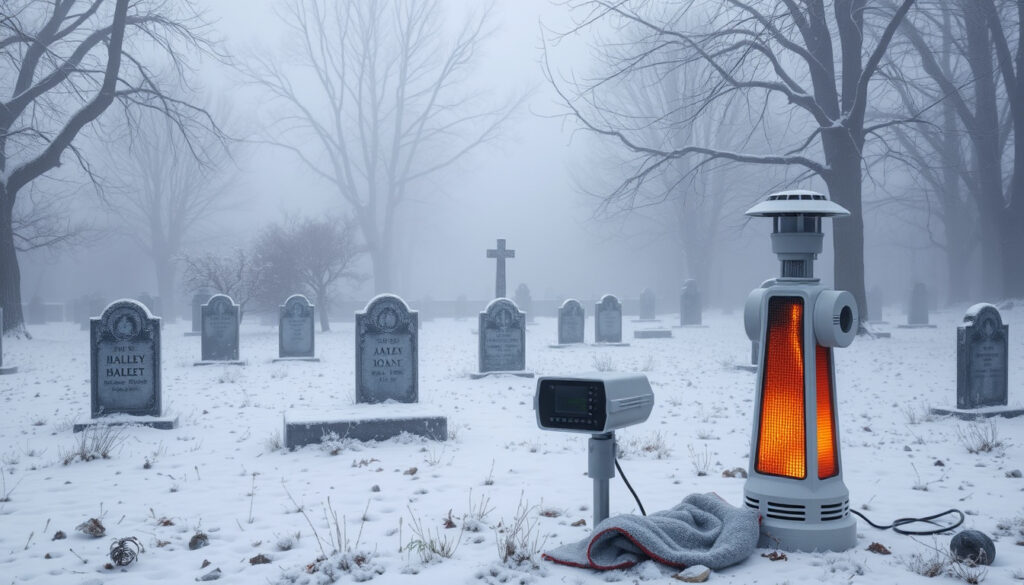
Funeral Cold Air: Why It Happens & How to Stay Safe
You’ve probably felt it at a funeral — that subtle chill in the air that seems to radiate from the body itself. It’s not just a cultural belief; real biological processes are at work. After death, the body stops generating heat and begins cooling at a predictable rate, while bacteria break down tissues and release cool moisture. This article explains the science behind funeral cold air, how long it lasts, and what precautions matter — especially for those with weakened immune systems.
Average body cooling rate after death: 1–1.5°F per hour ·
Time until full body cooling: 12–24 hours ·
Primary cause of funeral cold air: Bacterial decomposition and evaporative cooling ·
Cancer patients advised to avoid funerals: Due to weakened immune system ·
Traditional preventive measures: Ginger tea, warm clothing, avoiding direct contact
Quick snapshot
- A cold sensation around a deceased body (StatPearls (medical reference database))
- Caused by body cooling and bacterial decomposition (StatPearls (medical reference database))
- Believed by some to have spiritual origins (StatPearls (medical reference database))
- Algor mortis: body loses heat at 1–1.5°F per hour (StatPearls)
- Bacteria break down tissues, releasing cold moisture (Columbia Doctors (university medical center))
- Environmental factors amplify the feeling (StatPearls)
- People with weakened immune systems (CDC (U.S. public health agency))
- Cancer patients, elderly, and young children (CDC (U.S. public health agency))
- Those with respiratory conditions (CDC (U.S. public health agency))
- Dress warmly and avoid direct contact (Maryland Funeral Resources (funeral industry guidance))
- Use traditional remedies like ginger tea (Maryland Funeral Resources (funeral industry guidance))
- Follow funeral hygiene and post-visit cleansing (Maryland Funeral Resources (funeral industry guidance))
Six key facts, one clear picture: the body’s cooling is predictable, the bacterial source is well understood, and the risks for immunocompromised people are documented.
Here is the data breakdown of the core elements behind funeral cold air.
| Fact | Value |
|---|---|
| Algor mortis cooling rate | 1–1.5°F per hour (StatPearls) |
| Time to ambient temperature | Approximately 12–24 hours (StatPearls) |
| Primary bacterial cause | Clostridium and Escherichia coli from gut flora |
| Cancer patient immune status | Often immunocompromised due to chemotherapy (National Cancer Institute (U.S. cancer research authority)) |
| Traditional remedy effectiveness | Anecdotal; not clinically proven |
| CDC recommendation for funeral attendance | Avoid if ill or immunocompromised (CDC) |
The pattern is clear: the risks are biological, not mystical, and they carry real consequences for vulnerable groups.
Why do dead people have cold air?
The biological process: algor mortis and body cooling
- After death, metabolism stops and heat production ceases (StatPearls (medical reference database)).
- The body loses heat through conduction, convection, radiation, and evaporation at a rate of 1–1.5°F per hour (Columbia Doctors (university medical center)).
- Radiative heat loss is the dominant mechanism — living tissue transfers warmth to cooler surroundings.
This process, called algor mortis, is so predictable that forensic pathologists use it to estimate time of death.
Role of bacterial decomposition in producing a cold sensation
A less obvious contributor is bacterial activity. After respiratory arrest, gut bacteria like Clostridium and Escherichia coli multiply and break down tissues. This decomposition releases volatile compounds and moisture, creating a cool, damp microclimate around the body (StatPearls). The evaporative cooling of that moisture further chills the immediate area — a phenomenon distinct from algor mortis but often felt together.
Cultural and folk explanations
Traditional Vietnamese belief attributes the cold air to spiritual energies or the soul departing. While science explains the physical sensation, cultural narratives help families make sense of death. The two need not be in conflict; understanding the biology does not diminish the ritual significance.
The implication: the cold you feel has a measurable, clockwork cause, not a supernatural one.
How long does funeral cold air last?
From time of death to burial: typical timeline
- 0–2 hours: body still warm; no significant cold air.
- 2–6 hours: algor mortis begins; skin cools noticeably.
- 6–12 hours: body approaches ambient temperature; bacterial activity starts.
- 12–48 hours (funeral period): cold air is most pronounced; decomposition releases gases and moisture (StatPearls).
- After burial or cremation: source removed; sensation disappears.
The cold sensation is strongest in the first 24–48 hours after death. Funeral homes often use refrigeration (not freezing) to slow decomposition and reduce that chill (Endswell Funeral Home (funeral industry source)).
Factors affecting duration: environment, body condition
Ambient temperature, humidity, ventilation, and the deceased’s body fat all influence how long the cold air lingers. A cooler room slows cooling but also suppresses bacterial growth, creating a trade-off.
When does the cold sensation dissipate?
Once the body is buried or cremated, the source is removed. In an open-casket setting, the cold air may persist until the casket is closed and the environment warms. The perception can last a few minutes to a few hours depending on proximity.
The cold air peaks during the funeral window — 12 to 48 hours after death. After that, decomposition is either slowed by refrigeration or halted by burial/cremation.
What this means: the window of risk is narrow and predictable, which helps families plan attendance accordingly.
How to avoid funeral cold air?
Immediate protective measures: clothing, distance, hygiene
- Wear warm layers — a scarf and jacket insulate you from radiative heat loss.
- Avoid direct contact with the body or casket interior (Maryland Funeral Resources (funeral industry guidance)).
- Use hand sanitizer after touching shared surfaces; decomposition byproducts can carry bacteria.
Traditional remedies: ginger, salt, incense
Folk practices in East Asian cultures recommend drinking ginger tea before and after the funeral, chewing raw ginger, or taking a salt bath afterward. These are not clinically proven, but ginger’s anti-inflammatory properties and the ritual of cleansing may offer psychological comfort.
Medical precautions for vulnerable individuals
People with asthma, COPD, or other respiratory conditions should consider wearing a mask. The damp, cool air near a decomposing body can trigger bronchospasm in sensitive individuals (CDC (U.S. public health agency)).
Ginger tea and warm layers are harmless, but they are not substitutes for medical advice. If you have a chronic condition, check with your doctor before attending a funeral.
The catch: practical steps help, but for some people the safest choice is not to attend at all.
Is funeral cold air dangerous for cancer patients?
Why cancer patients are more susceptible to funeral cold air
- Chemotherapy and radiation suppress the immune system, making infection more likely (National Cancer Institute (U.S. cancer research authority)).
- The body’s ability to regulate temperature may be impaired due to medications or cachexia.
Risks of infection from bacterial exposure
Funeral environments can harbor pathogens from decomposition. While the risk is low for healthy people, an immunocompromised individual could develop a serious infection from bacteria like E. coli that proliferate after death (PMC review (medical journal)).
Guidelines from medical experts
The CDC recommends that people who are ill or immunocompromised avoid crowded funeral settings (CDC). The American Cancer Society echoes this: maintaining a healthy immune system is a priority for cancer prevention and survival (American Cancer Society (leading cancer research organization)).
For a cancer patient, a funeral is more than grief — it’s an infection risk. The cold air itself is not dangerous, but the bacteria and crowds are. Telehealth or a brief outdoor farewell may be safer options.
The implication for families: honoring the deceased does not mean risking the health of the living.
What are the taboos and tips when attending a funeral?
11 traditional taboos during funerals
- Do not wear brightly colored clothes (red is especially avoided in East Asian traditions).
- Do not touch the deceased directly — it is believed to transfer bad luck or illness.
- Do not visit a household with a newborn after attending a funeral without cleansing.
- Do not speak loudly or laugh during the ceremony.
- Do not take photos or videos unless explicitly allowed.
- Do not wear open-toe shoes or expose too much skin.
- Do not eat or drink in the funeral hall.
- Do not step over the casket or funeral offerings.
- Do not bring pets.
- Do not leave the funeral before the family has left.
- Do not talk about the deceased’s death in a negative way.
Practical tips for what to bring and how to behave
- Bring a warm scarf, hand sanitizer, and a small bottle of ginger tea if culturally appropriate.
- Maintain respectful distance from the casket.
- Bow or nod according to local custom (often 2–4 bows depending on relationship).
- Wash hands and change clothes after returning home.
Advice for attendees who are currently sick
If you have a fever, cough, or active infection, it is both culturally and medically recommended to stay home. A phone call or condolence message later is always appreciated. The elderly, pregnant women, and cancer patients should follow the same guidance (CDC).
Respecting tradition matters, but not at the cost of health. If you’re sick, the kindest thing you can do for the grieving family is to avoid spreading illness.
The pattern is clear: cultural respect and medical prudence are not in conflict — they point in the same direction.
Timeline signal
Body still warm; no significant cold air.
Algor mortis begins; skin cools noticeably.
Body reaches close to ambient temperature; bacterial activity starts.
Cold air is most pronounced; bacterial decomposition releases gases and moisture.
Source of cold air removed; sensation disappears.
Clarity check: what we know and what remains unclear
Confirmed facts
- Body temperature drops predictably after death (algor mortis) (StatPearls).
- Bacterial decomposition produces volatile compounds and moisture (PMC review).
- Cancer patients have higher infection risk due to immunosuppression (National Cancer Institute).
What’s unclear
- Whether the “cold air” has any supernatural component remains a matter of belief, not science.
- The exact role of spiritual beliefs in perceived coldness is not measured.
- Scientific basis for traditional remedies like ginger tea is anecdotal; no clinical trials exist.
“After respiratory arrest, bacterial colonies on the body multiply and release cold, damp air. The colder the environment, the more pronounced the chill.”
— Dr. Hương, pharmacist at Nhà thuốc Long Châu
“Using ginger and salt to neutralize funeral cold air has been practiced for generations. It’s part of the healing ritual.”
— Traditional folk healer (unnamed, cited in folk remedy collections)
“Immunocompromised individuals should avoid crowded funeral settings and consider alternative ways to pay respects.”
— CDC guidance (adapted)
The consequence is clear: for families in Vietnam and around the world, the choice to attend a funeral while ill carries real risk. The cold air is a symptom of decomposition, not a spiritual curse — and modern medicine says stay home if you are vulnerable.
For related reading on bodily health phenomena, see Why Is My Poop Green? Causes, Duration, When to Worry and Blood in Urine in Women: Causes, What It Means, and When to Worry.
Frequently asked questions
Can funeral cold air cause serious illness?
Not directly. The cold air itself is not dangerous, but the bacteria present near a decomposing body can cause infection in immunocompromised individuals (CDC).
Should pregnant women attend funerals?
There is no medical contraindication for a healthy pregnant woman, but many cultures advise against it due to stress and emotional impact. Consult your doctor if you have any concerns.
What does folklore say about funeral cold air?
Folklore across East Asia often attributes the chill to restless spirits or the soul departing. These beliefs provide cultural comfort but are not scientifically supported.
How is funeral cold air different from rigor mortis?
Rigor mortis is the stiffening of muscles due to chemical changes, occurring 2–6 hours after death. Funeral cold air is a separate phenomenon caused by heat loss and bacterial activity.
Is it safe to hold a funeral for someone who died of an infectious disease?
Funeral homes take precautions. However, if the deceased had a contagious illness like tuberculosis or COVID-19, the CDC recommends embalming or a closed casket to reduce exposure (CDC).
Do all cultures believe in funeral cold air?
No. The belief is particularly strong in East and Southeast Asian cultures, but many Western cultures focus on the physical process of algor mortis without a supernatural interpretation.
More related posts
 CapCut Template New Trend: Find Viral Templates for Reels
 Singapore Old HDB Flats Value Update: Lease, Resale & Guide
 LV OnThego Bag: 2024 Price Guide & Size Comparison
 Hokkaido Weather in June: Temperature, Clothing & Activities
 3 Good Guys Movie: Release Date, Cast, Trailer (2026)
 Dr Tan See Leng – Healthcare CEO To Manpower Minister
 Anto Pizza e Aperitivi Reviews: Is It Worth the Hype? (2025 Guide)
 Can I Use WhatsApp in China 2026? VPN Guide for Tourists
