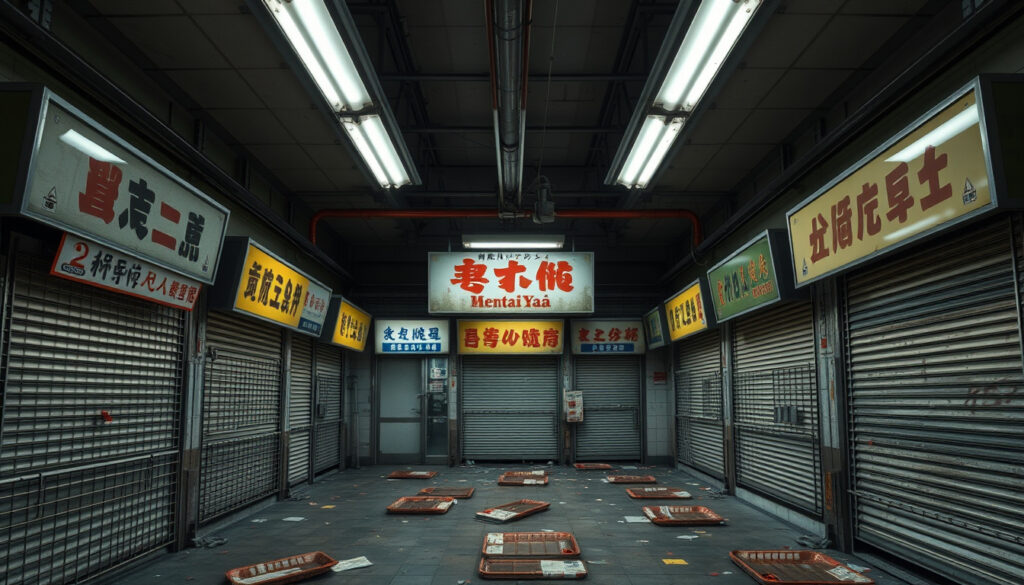
Mentai-Ya Hawker Chain Struggles – Why All 9 Stalls Closed
Mentai-Ya, a Singapore hawker chain known for its affordable mentai don rice bowls, has permanently shuttered all its outlets after nearly five years of operation. The closure marks the end of a venture that began during the COVID-19 pandemic and expanded to nine stalls across the island, only to succumb to mounting financial pressures that have plagued many small food businesses in the city-state.
Owner Khoo Keat Hwee, a 38-year-old former sales engineer, invested approximately S$500,000 into the business. Between 2023 and 2024, the company recorded losses of S$300,000 to S$350,000 from its hawker operations alone, with additional losses from related cafe ventures bringing the total shortfall to between S$500,000 and S$550,000 over two years. The final closures were announced via Instagram on April 14, 2025, with a message reading simply: “We are closed permanently. We tried but still we failed.”
The unraveling of Mentai-Ya offers a window into the broader challenges facing Singapore’s hawker culture, a UNESCO-recognized intangible heritage. Rising costs, manpower constraints, and the unforgiving economics of serving budget-friendly meals have forced numerous operators out of business in recent years.
Why is Mentai-Ya Closing Its Hawker Stalls?
The collapse of Mentai-Ya did not result from a single cause but rather from a convergence of pressures that steadily eroded the business’s viability. Understanding these factors requires examining the interconnected challenges that small hawkers increasingly face in Singapore’s evolving food landscape.
Escalating Operational Costs
Mentai-Ya built its brand on affordability, with signature dishes like chicken mentai dons and mentaiko fries priced between S$7.80 and S$10.80. However, the thin margins inherent in budget hawker fare left little room to absorb cost increases. The chain grappled with surging prices for ingredients, elevated GST rates that rose from 8% to 9%, and climbing coffee shop rental fees across multiple locations.
When Mentai-Ya attempted to pass on some of these costs by raising prices by approximately S$1 per dish in 2023, many customers voted with their feet. Khoo described entering this cycle as a “keh kiang” move, or an act of overconfidence. The price adjustment triggered reduced footfall, which in turn compounded financial losses, creating what industry observers characterized as a vicious cycle. Compounding these pressures, hawker food prices across Singapore rose 6.1% in 2023 according to SingStat data, outpacing general inflation and squeezing both operators and consumers.
Budget hawker concepts face a unique dilemma: their target customers are highly price-sensitive, yet the low base price leaves minimal margin for absorbing cost increases. When essential ingredients rise in price, operators must choose between absorbing losses or risking customer loss through price hikes.
Manpower Shortages and Labor Challenges
The food service industry in Singapore has struggled with chronic manpower shortages, and Mentai-Ya was not immune. Restrictions on foreign worker quotas and rising wages in the sector forced the company to lay off staff, a decision Khoo described as reluctant and painful. Workers reportedly understood the circumstances, but the reduction in manpower directly impacted the chain’s ability to operate multiple stalls efficiently.
The paradox facing many hawker operators is that while automation and robotics have been proposed as solutions to labor shortages, the capital required for such investments remains out of reach for struggling small businesses. Mentai-Ya had explored partnerships with robotics firms for tasks like wok-based cooking, but these initiatives could not reverse the immediate crisis.
External Setbacks and Competitive Pressures
Beyond structural challenges, Mentai-Ya encountered external setbacks that accelerated its decline. In June through August 2021, the chain suffered an alleged smear campaign by competitor Ishiro, which reportedly deployed fake negative reviews across online platforms. The coordinated attack allegedly drove a 20% drop in sales during that period. Mentai-Ya responded by filing a S$70,000 damages claim against the competitor, highlighting the brutal competitive dynamics within the affordable Japanese food segment.
Khoo Keat Hwee’s entrepreneurial journey in food and beverage included several earlier ventures that also faced difficulties. Tenryu Japanese Dining operated from 2015 to 2018 before closing with accumulated debt of approximately S$120,000. Additional cafe concepts included Chirashi-Ai at Beauty World in 2021 and Coffee & Chirashi in Choa Chu Kang, which shut its doors on March 4, 2025. This pattern suggests systemic challenges in the sector rather than isolated business missteps.
Mentai-Ya’s closure is not an isolated incident. The period from 2024 to 2025 saw numerous food and beverage operators in Singapore announcing similar shutdowns, reflecting structural pressures affecting the entire industry. Rising input costs, labor constraints, and shifting consumer behavior have created an environment where even established brands struggle to maintain profitability.
Impact Summary
Key Insights
- Budget hawker concepts face inherent tension between affordability and cost absorption capacity
- GST increases, even modest ones, can disproportionately affect thin-margin businesses
- Customer sensitivity to price increases in the S$7–S$11 range remains extremely high
- Manpower constraints compound operational challenges in multi-location hawker chains
- Online reputation management has become critical as fake reviews can cause measurable sales drops
- Prior F&B experience does not guarantee immunity from sector-wide pressures
- Singapore’s hawker ecosystem faces structural challenges beyond individual business performance
Snapshot of Facts
| Detail | Information | Source |
|---|---|---|
| Business Launch | 2020, during COVID-19 pandemic | Mothership, STOMP |
| Peak Outlets | 9 hawker stalls across Singapore | Mothership |
| Menu Price Range | S$7.80 to S$10.80 | Mothership, STOMP |
| Total Investment | Approximately S$500,000 | STOMP |
| Losses (2023–2024) | S$500,000–S$550,000 | Mothership, STOMP |
| Hawker Stall Losses | S$300,000–S$350,000 | STOMP |
| Final Closure Date | April 14, 2025 | Mothership |
| Competitor Review Attack | June–August 2021, 20% sales drop | Mothership, STOMP |
| Sector Inflation (2023) | Hawker food prices up 6.1% | SingStat via Mothership |
Which Mentai-Ya Outlets Are Shutting Down?
The shutdown affected all nine Mentai-Ya locations that had operated across Singapore. These outlets were distributed across various neighborhoods, each representing a different chapter in the chain’s expansion journey that began during the pandemic when opportunistic leasing became possible.
Complete List of Affected Locations
The locations that closed permanently span multiple housing estates and districts, reflecting the chain’s strategy of broad geographic coverage to capture diverse customer bases. The affected outlets were situated in Punggol, Sengkang, Choa Chu Kang, Bukit Panjang, Clementi, Toa Payoh, Boon Keng, Serangoon Central, and Tampines.
By late March 2025, only two locations remained operational: the Punggol and Tampines stalls. These final outposts represented the chain’s last attempt to maintain a presence in the market. However, financial pressures had become unsustainable, and on April 14, 2025, the remaining outlets joined their counterparts in permanent closure.
Staff and Operational Impact
The layoffs resulting from the closures affected employees across all locations. Khoo described the process of reducing staff as deeply uncomfortable, noting that workers generally understood the difficult circumstances facing the business. The manpower constraints that had plagued operations in preceding months ultimately made it impossible to maintain the staffing levels required for multiple concurrent outlets.
Suppliers also felt the impact, with reports indicating that debt accumulation led to supply cuts in the final months of operation. This created an additional operational challenge as the chain struggled to maintain consistent menu offerings while simultaneously managing financial obligations.
Mentai-Ya Closure Timeline and Announcements
The unraveling of Mentai-Ya occurred gradually over nearly two years, with each closure announcement revealing mounting financial pressure. Tracing the sequence of events provides context for how the business reached its final state of complete shutdown.
- June–August 2021: The chain experienced a significant sales decline of approximately 20% following an alleged smear campaign involving fake negative reviews from competitor Ishiro. Mentai-Ya subsequently filed a S$70,000 damages claim.
- November 14, 2023: The company announced the closure of its Boon Keng outlet, with plans to shutter the Clementi location by December 2024.
- October 13, 2024: The Toa Payoh stall’s final day of operation was set for November 9, 2024. Official statements cited GST increases, rising rentals, and customer loss as contributing factors.
- February 18, 2025: The Sengkang outlet ceased operations.
- March 4, 2025: The Coffee & Chirashi cafe in Choa Chu Kang closed, marking the fifth closure within approximately 18 months. At this point, accumulated losses reached the S$500,000 to S$550,000 range.
- March 25, 2025: The Serangoon Central location shut down. The Bukit Panjang stall closed shortly afterward. Only the Punggol and Tampines outlets remained operational.
- April 14, 2025: All remaining outlets, including the final Punggol and Tampines stalls, permanently closed. The company posted on Instagram: “We are closed permanently. We tried but still we failed.”
The timeline reveals an accelerating pace of closures in 2024 and 2025, suggesting that earlier measures to sustain operations became increasingly untenable. Each closure reduced revenue potential while fixed costs remained, creating a downward spiral that ultimately proved irreversible.
Is Mentai-Ya Going Bankrupt?
Questions about bankruptcy have circulated online following the chain’s closure announcement. Available sources do not confirm any formal bankruptcy proceedings as of the most recent reports. Khoo Keat Hwee has not publicly addressed bankruptcy rumors, and no court records or official announcements confirming such action have appeared in accessible coverage.
Financial Standing and Outstanding Matters
What is established is that the business accumulated significant debt during its final years of operation. Reports indicate suppliers reduced or cut off supply due to unpaid obligations. The closure of all outlets means the company has ceased generating revenue, raising questions about how outstanding financial commitments will be addressed.
Prior ventures by Khoo also carry debt implications. Tenryu Japanese Dining, which operated from 2015 to 2018, reportedly left approximately S$120,000 in accumulated debt. Whether these prior obligations remain active or have been resolved is not clear from available sources.
What Remains Unclear
Several aspects of the post-closure situation remain uncertain. No public updates regarding bankruptcy filings or restructuring attempts have emerged since April 2025. The status of outstanding supplier payments, landlord obligations, and employee compensation has not been detailed in available coverage.
Confirmed: All nine Mentai-Ya outlets closed permanently on April 14, 2025. Total losses exceeded S$500,000 over two years. Khoo has publicly shared his experience and advised others against entering food and beverage.
Unconfirmed: Any formal bankruptcy proceedings. Current financial obligations or resolutions. Specific plans for addressing outstanding debts. Whether Khoo has pursued or abandoned ideas like private-hire driving or robotics ventures.
Future Considerations
In March 2025, as closures mounted, Khoo mentioned considering private-hire driving as an alternative income source. Earlier proposals had included focusing remaining resources on a smaller number of stalls and exploring automation technologies such as Wok AI for preparing dishes like Hokkien mee. The feasibility and current status of these alternatives remain unclear following the final shutdown.
No information has emerged regarding Khoo’s plans following the April 2025 closures. The question of whether he will attempt another business venture, pursue employment, or focus on addressing outstanding obligations cannot be answered based on current available sources.
Singapore’s Hawker Sector Under Pressure
Mentai-Ya’s closure occurs against a backdrop of broader challenges facing Singapore’s hawker industry. The government has invested significantly in maintaining hawker culture, which was inscribed on UNESCO’s Representative List of the Intangible Cultural Heritage of Humanity in 2020. However, the economic realities of operating hawker stalls have become increasingly difficult.
Rising rentals, food ingredient costs, utilities, and manpower expenses have squeezed margins for operators across the sector. The COVID-19 pandemic temporarily reduced competition as some operators exited the market, but the subsequent recovery has brought new challenges including labor shortages and cost inflation.
Consumer behavior has also shifted. Price sensitivity remains high, particularly for budget concepts like mentai don. When operational costs increase, hawkers face the unenviable choice between absorbing losses or passing costs to customers who may then seek alternatives. For those exploring affordable dining options in Singapore, Best Biryani in Singapore – Top Halal Spots and Prices offers insights into how other affordable concepts navigate these challenges.
The case of Mentai-Ya demonstrates how quickly a promising concept can unravel when multiple pressures converge. The chain launched during an opportune period of reduced competition and expanded rapidly, but the economics of serving affordable meals in premium hawker locations ultimately proved unsustainable.
What the Owner Has Said
Khoo Keat Hwee has been relatively forthcoming about his experience, sharing details in interviews and social media posts. His reflections offer insight into both the specific challenges faced by Mentai-Ya and his broader assessment of the food and beverage landscape.
On GST registration, which he later described as a mistake: “I thought registering for GST was the right thing to do as a business. But it eroded our already thin margins. It was a keh kiang move.”
On his advice to aspiring food entrepreneurs: “Don’t come into food and beverage. The costs, the rentals, the manpower issues—it’s not worth it unless you have deep pockets and absolute conviction.”
These statements, widely reported in Singapore media, reflect a sense of regret tempered by hard-won experience. Khoo’s openness about failure is notable in a business culture where setbacks are often private. Whether his candor will influence others considering similar ventures remains to be seen.
For those interested in how other dining establishments manage costs and operations, Gardens by the Bay Restaurant – Menus Prices and Tips provides a contrasting example of how larger venues approach pricing and service.
Summary and Current Status
Mentai-Ya has permanently closed all nine of its hawker outlets as of April 14, 2025. The closure follows accumulated losses of S$500,000 to S$550,000 over two years, driven by rising costs, manpower shortages, and the challenges of maintaining thin margins on budget menu items. Owner Khoo Keat Hwee has publicly shared his experience as a cautionary tale, advising others against entering the food and beverage sector under current conditions. Whether formal bankruptcy proceedings will follow remains unconfirmed. The chain’s struggles reflect broader pressures facing Singapore’s hawker industry, where cost inflation and labor constraints have created an increasingly difficult operating environment.
Frequently Asked Questions
When did Mentai-Ya close its last outlets?
All remaining outlets, including the final Punggol and Tampines stalls, permanently closed on April 14, 2025.
How many Mentai-Ya outlets were affected by the closures?
Nine hawker stalls across Singapore were affected, spanning locations in Punggol, Sengkang, Choa Chu Kang, Bukit Panjang, Clementi, Toa Payoh, Boon Keng, Serangoon Central, and Tampines.
What caused Mentai-Ya’s financial struggles?
The chain faced rising ingredient costs, GST increases from 8% to 9%, elevated coffee shop rentals, and manpower shortages due to foreign worker quota restrictions and wage increases. A 2021 smear campaign by a competitor also caused a reported 20% sales drop.
Has Mentai-Ya’s owner declared bankruptcy?
Available sources do not confirm any formal bankruptcy proceedings. Bankruptcy rumors have circulated online but remain unverified as of the most recent reports.
What was Mentai-Ya’s menu price range?
Signature items like chicken mentai dons and mentaiko fries were priced between S$7.80 and S$10.80, reflecting the chain’s positioning as an affordable casual dining option.
What did the owner say about entering food and beverage?
Khoo Keat Hwee advised against entering the food and beverage sector, citing escalating costs, rental pressures, and labor challenges. He described his own experience as a cautionary example for aspiring entrepreneurs.
Did Mentai-Ya have prior business struggles?
Yes. Before Mentai-Ya, Khoo operated Tenryu Japanese Dining from 2015 to 2018, which closed with approximately S$120,000 in debt. He also ran cafe concepts including Chirashi-Ai and Coffee & Chirashi, with the latter closing in March 2025.
What happened with the competitor review controversy?
In mid-2021, Mentai-Ya alleged that competitor Ishiro conducted a smear campaign using fake negative reviews, causing a 20% sales decline over several months. The chain filed a S$70,000 damages claim in response.
More related posts
 How Many Hours in a Year – Leap and Non-Leap Counts
 Chiam See Tong Illness: Stroke, Hip Injury Updates
 Data Entry Jobs in Singapore: Salary, Visa & Top Employers (2025)
 Wisdom Tooth Extraction Cost – Average Prices and Factors
 Xu Wo Yao Yan (Love’s Ambition): Plot, Episodes & Netflix
 Toa Payoh Woman Fined $1,200 for Feeding Pigeons – Wildlife Act
 Gardens by the Bay Restaurant – Menus Prices and Tips
 Halal Dessert Near Me: Ireland Guide & Spots Open Now
