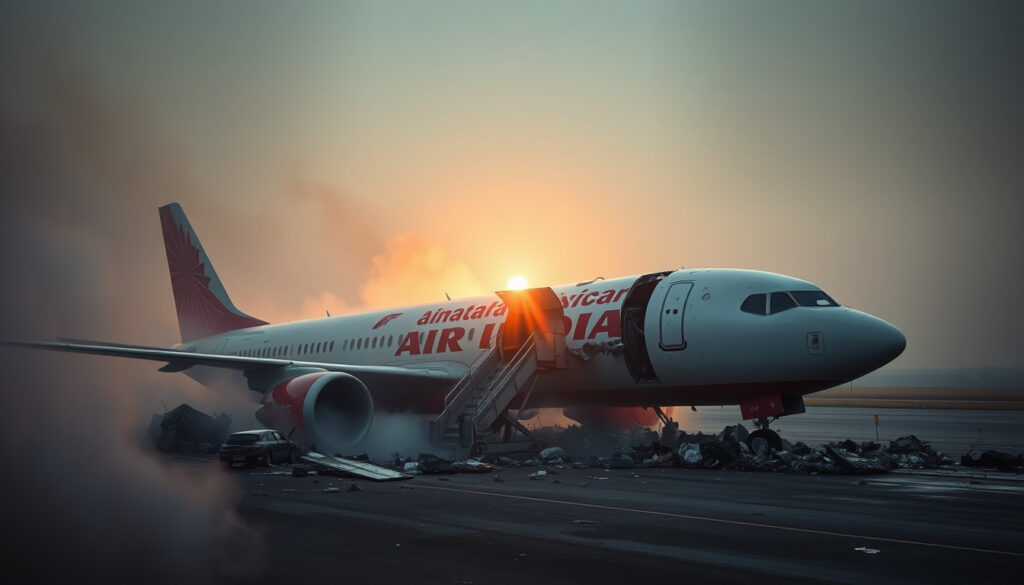
Air India Crash Survivor – Flight 1344 Escape Accounts
The Air India Express Flight 1344 crash on August 7, 2020, claimed 21 lives at Calicut International Airport, yet left 169 survivors. Among those who escaped were all four cabin crew members, while both pilots—Captain Deepak Sathe and First Officer Akhilesh Kumar—perished alongside 17 passengers. Survivors described a harrowing escape as the Boeing 737-800 split in two after overshooting a tabletop runway during heavy rain.
The repatriation flight from Dubai, carrying 184 passengers and 6 crew members, was the third landing attempt at the Kerala airport. Passengers and crew recall moments of terror as the aircraft plunged into a gorge, followed by a frantic evacuation aided by local residents, CISF personnel, and firefighters. The lack of post-crash fire significantly contributed to the survival of those aboard.
The Aircraft Accident Investigation Bureau released its final report in September 2021, identifying the probable cause as non-adherence to standard operating procedures by the pilot flying. Interviews with surviving passengers and the cabin crew who assisted in the evacuation have since provided detailed accounts of what witnesses described as a miracle escape.
Who Survived the Air India Express Crash?
Of the 190 people aboard Flight 1344, 169 survived the crash. The survivors included 165 passengers and all four cabin crew members. None of the cockpit crew survived. The fatalities comprised both pilots and 17 passengers who succumbed to injuries sustained during the runway overshoot and subsequent fall into the gorge.
Among the survivors highlighted in media coverage was Viswashkumar Ramesh, a 39-year-old UK-based passenger who spoke with the BBC about his experience. Ramesh described losing his brother Ajay, who was seated nearby, while he himself managed to escape. “I am the luckiest man,” Ramesh said in the interview, referring to his survival as a miracle amid the tragedy that claimed his brother’s life.
The four cabin crew members survived with injuries and played a crucial role in assisting other survivors during the evacuation process. Their survival and subsequent assistance were noted by rescue personnel who arrived at the scene. Passengers interviewed by India Today described various injuries sustained during the impact, including head wounds requiring stitches, while emphasizing their gratitude that the aircraft did not catch fire.
Key Findings
- Both pilots—Captain Deepak Sathe (59) and First Officer Akhilesh Kumar (32)—died in the crash.
- Captain Sathe had over 10,000 flight hours and had landed at Calicut 27 times before the incident.
- All four cabin crew members survived and helped evacuate other passengers.
- The aircraft split in two after falling 30-35 feet into a gorge beyond the runway.
- No post-crash fire occurred, which survivors credited as a factor in their escape.
- The AAIB report attributed the crash to non-adherence to standard operating procedures.
- Passenger Viswashkumar Ramesh was among those publicly sharing survivor accounts of the ordeal.
| Fact | Details |
|---|---|
| Flight Number | IX-1344 |
| Aircraft Type | Boeing 737-800 |
| Route | Dubai to Kozhikode (Calicut) |
| Total on Board | 190 (184 passengers, 6 crew) |
| Survivors | 169 |
| Fatalities | 21 |
| Captain | Deepak Vasant Sathe (59) |
| First Officer | Akhilesh Kumar (32) |
| Cabin Crew Survived | 4 (of 4) |
| Injured | 110+ (22 critical) |
The absence of post-crash fire proved decisive for survivors. Captain Sathe was credited with shutting off the aircraft’s engines before impact, a decision investigators believe prevented a catastrophic fire that would have significantly reduced the number of survivors.
What Happened During the Air India Express Crash?
Air India Express Flight 1344 was a Boeing 737-800 operating a repatriation flight for Indian nationals stranded abroad due to COVID-19 travel restrictions. The aircraft departed Dubai International Airport on the evening of August 7, 2020, carrying 184 passengers and 6 crew members, all Indian nationals.
The Approach and Landing Attempts
Calicut International Airport, also known as Karipur Airport, features a tabletop runway—a raised runway built on a plateau with drop-offs at both ends. This geographical characteristic makes precision landings essential, particularly during adverse weather conditions.
The flight encountered heavy rain upon approaching Kozhikode. The first two landing attempts proved unsuccessful, with the aircraft undershooting the runway on both occasions due to tailwind conditions and reduced visibility. Crew elected to perform go-arounds, circling for another approach.
During the third landing attempt, the pilot flying continued an unstabilised approach, touching down approximately halfway down runway 10 rather than within the designated touchdown zone. By the time the aircraft touched down, insufficient runway remained for a safe stop.
The Runway Overshoot and Crash
The aircraft failed to decelerate before reaching the end of the tabletop runway. It overshot the runway surface, crossed a perimeter road, and plunged 9-10.5 metres into the gorge below. The impact was severe enough to cause the Boeing 737-800 to break apart, splitting into two main sections.
Calicut International Airport’s tabletop runway has been the site of previous incidents. The 2010 crash of Air India Express Flight 812 at Mangalore also involved a tabletop runway, underscoring the particular challenges such airfield designs present during adverse weather operations.
Despite the severity of the impact, no post-crash fire occurred. The absence of fuel ignition was attributed partly to Captain Sathe’s reported action of shutting off the engines before the aircraft reached the gorge. This decision was later highlighted in the investigation as a factor that potentially saved additional lives.
The Evacuation
Survivors described a chaotic scene following the breakup. Passengers who had been thrown from their seats or trapped in twisted metal crawled toward exits while the aircraft lay in two pieces amid rain and wreckage. The four cabin crew members, all of whom survived with injuries, immediately began assisting other survivors in the evacuation.
Local residents were among the first to arrive at the crash site, followed closely by CISF personnel stationed at the airport, police officers, and firefighters. Rescue teams worked through traffic obstacles to reach the wreckage, eventually evacuating all survivors to hospitals in Kozhikode and Malappuram districts within approximately three hours.
The rescue operation faced additional complications when two survivors tested positive for COVID-19. Subsequent testing revealed that 24 rescue personnel had contracted the virus, leading to the establishment of a containment zone around the affected area.
How Did Survivors Describe Their Escape?
Passenger accounts of the crash survival painted vivid pictures of terror and subsequent relief. Survivors interviewed by India Today described broken windows, head injuries requiring medical attention, and the disorienting experience of finding themselves amid twisted metal and scattered belongings.
Many survivors recounted losing their belongings during the impact, with only phones and passports occasionally recovered intact. The physical injuries reported included cuts, bruises, and more serious trauma requiring hospitalization. Twenty-two survivors were listed in critical condition upon arrival at medical facilities.
In a November 2025 interview with the BBC, survivor Viswashkumar Ramesh shared his perspective as one of those who escaped the Kozhikode crash. Ramesh, who had been seated alongside his brother Ajay, described the moment the aircraft went down. While he managed to survive what he called a “miracle” escape, his brother did not survive. “I am the luckiest man,” Ramesh stated, emphasizing the stark contrast between his survival and his brother’s death.
The cabin crew who survived the crash provided critical assistance during the evacuation despite their own injuries. Their actions in guiding panicked passengers toward exits were noted by rescue personnel who arrived at the scene. Survivors repeatedly expressed gratitude toward the local communities, CISF officers, and emergency responders whose quick actions contributed to the overall survival rate.
The absence of fire emerged as a recurring theme in survivor testimonies. Multiple passengers remarked that they believed their survival would have been impossible had the aircraft caught fire during or after the crash. The fuel that remained in the tanks following the impact never ignited, a circumstance that investigators would later connect to Captain Sathe’s pre-impact engine shutdown.
Aviation safety experts note that the relatively high survival rate in this crash underscores the importance of proper seatbelt use and attention to safety briefings. The passengers who survived with minor injuries often credited their preparation during the turbulent approach and landing attempts.
What Caused the Air India Express Flight 1344 Crash?
The Aircraft Accident Investigation Bureau (AAIB) conducted a comprehensive investigation into the crash, releasing its final report on September 11, 2021—more than a year after the incident. The investigation examined flight data, cockpit voice recordings, ground evidence, and meteorological conditions to determine the probable cause.
Findings of the Investigation
According to the AAIB report, the probable cause of the crash was the pilot flying’s non-adherence to standard operating procedures. The investigation found that during the third landing attempt, the aircraft touched down well beyond the designated touchdown zone on runway 10, leaving insufficient distance for a safe landing roll.
The report further noted that the first officer failed to take control of the aircraft and call for a go-around when it became apparent that the approach was unstabilised. This breakdown in crew resource management contributed to the continuation of an unsafe landing attempt that should have been abandoned.
Weather conditions played a significant role in complicating the landing. Heavy rain reduced visibility, while tailwind components on approach increased the aircraft’s groundspeed. The tabletop runway configuration at Calicut left no margin for error once the aircraft touched down beyond the touchdown zone.
Contributing Factors
Investigators identified several contributing factors beyond the immediate cause. The decision to continue landing attempts despite deteriorating weather conditions raised questions about crew judgment and airline protocols for diversion decisions.
Captain Deepak Sathe’s extensive experience, including 27 previous landings at Calicut, highlighted the paradox that familiarity with an airport can sometimes lead to overconfidence. While his decision to shut off the engines before impact was praised as potentially life-saving, it did not prevent the catastrophic outcome that followed the runway overshoot.
The AAIB report did not identify any mechanical failures or aircraft system malfunctions as contributing factors. The Boeing 737-800 performed as expected during the flight; the crash resulted from operational and procedural decisions rather than equipment issues.
The crash represented India’s deadliest aviation accident since the 2010 Mangalore crash involving Air India Express Flight 812. Both incidents occurred at tabletop airports and involved runway overruns, prompting ongoing discussions about approach procedures and runway safety at such facilities.
What Updates Exist on the Air India Express Crash Survivors?
Following the August 2020 crash, survivors received medical treatment at hospitals in Kozhikode and Malappuram districts. The initial hospitalization was complicated by COVID-19 protocols, with all survivors tested for the virus upon admission. Two survivors tested positive, adding complexity to the treatment process.
The Air India Express management deployed response teams from Kochi, Mumbai, and Delhi to assist survivors and coordinate with local authorities. The airline provided support for medical expenses and travel arrangements for those requiring extended care.
Long-term Outcomes
Among the passengers who shared their stories publicly, Viswashkumar Ramesh continued to speak about the experience in the years following the crash. His November 2025 interview with the BBC represented one of the most recent public accounts from a survivor, though researchers noted the possibility of event conflation with other incidents in the interview content.
The four cabin crew members who survived returned to duty after recovery. Their actions during the evacuation earned recognition from both the airline and aviation safety advocates who studied the crash response.
No significant survivor-focused updates emerged after the 2021 AAIB report release. Legal proceedings and compensation claims continued through Indian courts, with the airline settling claims with families of the deceased and survivors according to applicable international and domestic aviation regulations.
Timeline of the Air India Express Flight 1344 Crash
The following sequence outlines the key events of August 7, 2020, and subsequent developments related to the crash.
- Evening, August 7, 2020: Air India Express Flight 1344 departs Dubai International Airport carrying 184 passengers and 6 crew members on a COVID-19 repatriation flight.
- Approximately 7:30 PM IST: The aircraft arrives at Calicut International Airport amid heavy rain. First two landing attempts aborted due to tailwind and reduced visibility.
- Third landing attempt: Aircraft touches down halfway down runway 10, beyond the touchdown zone, during an unstabilised approach.
- Runway overshoot: Unable to stop before the runway end, the aircraft crosses a perimeter road and plunges into the gorge below.
- Impact and breakup: The aircraft falls 9-10.5 metres, breaking into two main sections. Captain Sathe reportedly shuts off engines before impact.
- Evacuation begins: Surviving cabin crew and passengers begin evacuation as local residents, CISF, police, and firefighters arrive at the scene.
- Rescue completion: All survivors evacuated within approximately three hours, transported to hospitals in Kozhikode and Malappuram.
- Death toll rises: Initial casualties of 17 at the scene eventually rise to 21 following deaths of several critically injured survivors.
- September 11, 2021: AAIB releases final report identifying non-adherence to SOPs as the probable cause of the crash.
What Is Confirmed and What Remains Unclear?
The investigation and survivor accounts have established many facts about the crash, though certain details continue to require careful verification.
| Established Information | Information Requiring Further Verification |
|---|---|
| The crash occurred on August 7, 2020, at Calicut International Airport | Precise sequence of cockpit communications during the third landing attempt |
| 21 people died, including both pilots | Specific medical conditions and recovery status of individual survivors |
| 169 people survived, including all four cabin crew members | Complete passenger manifest and individual survival circumstances |
| The aircraft touched down beyond the touchdown zone on an unstabilised approach | Full extent of weather-related decision-making by the crew |
| The AAIB identified SOP non-adherence as the probable cause | Details of internal airline protocols and disciplinary actions taken |
| Captain Sathe was credited with shutting off engines before impact | Any changes to tabletop runway operations at Calicut since the crash |
The survivor accounts gathered from interviews and news reports provide valuable personal perspectives on the crash experience, though they should be understood as individual recollections rather than verified technical evidence. The distinction between confirmed investigation findings and survivor testimonies matters for anyone seeking to understand the full scope of the incident.
Information in this article draws from the official AAIB investigation report, Wikipedia documentation of the incident, interviews published by India Today and the BBC, and statements from PaddleYourOwnKanoo. Where discrepancies exist between sources, the article prioritizes information consistent with the official AAIB report.
Historical Context of the Air India Express Crash
The Flight 1344 crash represented the deadliest aviation accident in India since November 2010, when Air India Express Flight 812 overshot the runway at Mangalore’s tabletop airport and crashed into a gorge, killing 158 people. Both incidents shared common characteristics: a tabletop runway configuration, a runway overshoot, and a crash into terrain beyond the runway end.
The Mangalore crash had prompted reviews of safety procedures at India’s tabletop airports, including assessments of runway length, RESA (Runway End Safety Area) dimensions, and approach procedures. The recurrence of a similar accident pattern at another tabletop airport ten years later raised questions about the implementation and effectiveness of safety improvements recommended after the earlier disaster.
Captain Deepak Sathe received a state funeral in Maharashtra, where he was honored for his years of service to aviation. His family and colleagues remembered a pilot with extensive experience and a reputation for careful professionalism. First Officer Akhilesh Kumar, 32 years old at the time of his death, had been building his career on the Boeing 737 after completing training with Air India Express.
The crash occurred during an extraordinary period of global travel disruption caused by the COVID-19 pandemic. The repatriation flight, designated to bring home Indian nationals stranded abroad, highlighted how essential air travel remained even during international health emergencies. The subsequent discovery of COVID-positive survivors and rescuers added an additional layer of complexity to the already challenging rescue operation.
Sources and Statements from the Investigation
The official AAIB report, released on September 11, 2021, serves as the primary authoritative source for factual findings about the crash cause. The report concluded that the probable cause was the pilot flying’s non-adherence to standard operating procedures during the third landing attempt, combined with the first officer’s failure to take control and initiate a go-around.
The probable cause of the accident was the non-adherence to standard operating procedures by the pilot flying during the third landing attempt, and the first officer’s failure to take control and call for a go-around when the approach was found to be unstabilised.
— AAIB Final Report, September 2021
Survivor statements provided through media interviews offered complementary perspectives. Viswashkumar Ramesh’s BBC interview represented one of the most detailed personal accounts available, though researchers noted potential conflation with other aviation incidents in portions of the interview content.
Aviation safety databases, including records maintained by aviation-safety.net, corroborated the timeline and casualty figures established through official and media sources. The consistency across multiple independent sources strengthens confidence in the factual foundation of the crash narrative.
Summary
The Air India Express Flight 1344 crash on August 7, 2020, killed 21 people including both pilots, Captain Deepak Sathe and First Officer Akhilesh Kumar. Of the 190 passengers and crew aboard the Boeing 737-800, 169 survived, including all four cabin crew members. Survivors credited the absence of post-crash fire—which officials attributed to Captain Sathe’s reported engine shutdown before impact—with enabling their escape from the wreckage.
The AAIB investigation concluded that non-adherence to standard operating procedures caused the crash. The aircraft touched down beyond the touchdown zone during an unstabilised approach on its third landing attempt, overshooting the tabletop runway at Calicut International Airport and falling into a gorge below. Survivors, including passenger Viswashkumar Ramesh who publicly shared his account, described the experience as a miracle escape amid tragedy.
For those researching SGD to INR exchange rate fluctuations during the pandemic period, the crash represented a human tragedy that unfolded against the backdrop of extraordinary global circumstances affecting international airline luggage size guide and travel policies. The incident remains a significant chapter in modern aviation history, prompting ongoing discussions about tabletop runway safety and crew decision-making protocols.
Frequently Asked Questions
How many people survived the Air India Express Flight 1344 crash?
169 people survived the crash, including 165 passengers and all four cabin crew members. The 21 fatalities included both pilots and 17 passengers.
Did any cockpit crew members survive?
No, none of the cockpit crew survived. Both Captain Deepak Sathe and First Officer Akhilesh Kumar died in the crash. All four cabin crew members survived with injuries.
What caused the Air India Express crash?
The AAIB investigation determined that the probable cause was non-adherence to standard operating procedures by the pilot flying. The aircraft touched down beyond the touchdown zone during an unstabilised approach, leading to a runway overshoot on the tabletop runway.
What was the survivor’s account of the crash?
Survivors described a chaotic scene following the aircraft breakup. Passenger Viswashkumar Ramesh told the BBC he lost his brother Ajay in the crash but called himself the “luckiest man” for surviving. Many survivors credited the absence of fire with enabling their escape.
Where did the Air India Express crash occur?
The crash occurred at Calicut International Airport (Karipur) in Kerala, India, on August 7, 2020. The aircraft overshot the tabletop runway and fell into a gorge approximately 9-10.5 metres below the runway level.
What safety changes followed the crash?
The AAIB report included recommendations for improved SOP adherence and crew resource management. The crash reignited discussions about tabletop runway safety in India, where similar accidents had occurred previously at Mangalore.
When was the investigation report released?
The Aircraft Accident Investigation Bureau released its final report on September 11, 2021—more than a year after the crash occurred. The report attributed the probable cause to SOP non-adherence during the landing approach.
More related posts
 How Often to Change Bed Sheets: Expert Guide on Frequency
 Emerald Hill – The Little Nyonya Story Characters Full Guide
 High Interest Savings Account Singapore 2026: Best Rates
 Give Me Jesus Chords: Key of G, Progressions & Beginner Tips
 T-Bill Auction Results Today – Latest Status and Analysis
 Mewatch Channel 8 Live – Free Streaming Guide
 The Fantastic Four: First Steps Showtimes Near Me, Runtime & Cast
 China Golden Week 2025: Dates & Travel Tips
