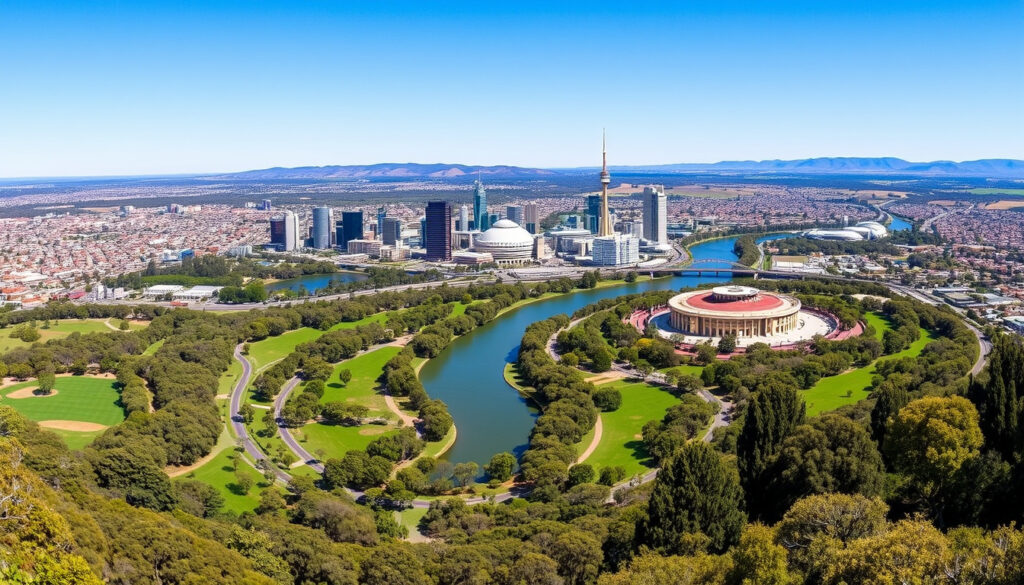
Best Things to Do in Adelaide: Attractions & Itineraries
Adelaide is the kind of city that sneaks up on you. One moment you’re browsing the stalls at the Adelaide Central Market, a food lover’s paradise with over 70 traders (Experience Adelaide tourism authority), and the next you’re sipping wine in a world-famous Barossa cellar door — and it’s barely taken you 20 minutes to get there.
Metro population: 1.3 million ·
Known as: the 20-minute city ·
Major wine regions: 4 (Barossa, McLaren Vale, Adelaide Hills, Clare Valley) ·
Annual festivals: Adelaide Fringe, WOMADelaide ·
Average days recommended: 3–4 days
Quick snapshot
- Adelaide hosts the Adelaide Fringe, one of the largest annual festivals in the Southern Hemisphere (Experience Adelaide)
- Adelaide Central Market is a top food attraction with 70+ traders (TripAdvisor traveler rankings)
- Cleland Wildlife Park allows hand-feeding of kangaroos, about 20 min from city (Viator tours & activities)
- Adelaide Botanic Garden covers more than 124 acres (Viator)
- The exact origin of the “20-minute city” nickname – while widely attributed to urban planning, official documentation is sparse
- Nightlife districts and their safety after dark – limited official guidance
- Which free activities are best for adult-only groups vs. families
- Adelaide founded in 1836 (South Australia Tourism Commission)
- SteamRanger Heritage Railway runs selected days between Mount Barker, Strathalbyn, Goolwa, Victor Harbor (Visit Adelaide Hills family guide)
- Check Illuminate Adelaide for free light art events in winter (Illuminate Adelaide official site)
- Book Barossa Valley wine tours early for weekends (Illuminate Adelaide official site)
- Plan a 3-day itinerary to balance city, hills, and coast (Illuminate Adelaide official site)
The compact layout means you can tick off a market, a wildlife park, and a beach in a single day without feeling rushed.
| Nickname | 20-minute city |
| Population (metro) | 1.3 million |
| Founded | 1836 |
| Main airport | Adelaide Airport (ADL) |
| Time zone | ACST (UTC+9:30) |
Is there anything fun to do in Adelaide?
Top attractions in Adelaide
Adelaide packs a surprising variety into its compact grid. The Adelaide Central Market is consistently rated the city’s top attraction (TripAdvisor traveler rankings), offering a sensory overload of fresh produce, artisan cheese, and multicultural street food. Just a short tram ride away, Glenelg Beach buzzes with cafes, a jetty, and dolphin-spotting cruises. For wildlife lovers, Adelaide Zoo houses more than 3,000 animals across 250 species (TripAdvisor), while Cleland Wildlife Park lets you hand-feed kangaroos and wallabies – a 20-minute drive from the CBD (Viator tours & activities).
First-time visitors often underestimate how many distinct experiences lie within a 20-minute radius. The city’s layout means you can tick off a market, a wildlife park, and a beach in a single day without feeling rushed.
Festivals and events
Adelaide’s festival calendar is a major draw. The Adelaide Fringe (February–March) is the largest arts festival in the Southern Hemisphere, filling venues from the city parklands to laneway pop-ups (Experience Adelaide). WOMADelaide brings world music and dance to Botanic Park each March. In winter, Illuminate Adelaide transforms streets and buildings with free and ticketed light installations (Illuminate Adelaide official site). The Adelaide Hills events calendar also features classic car shows, wine festivals, and art exhibitions year-round (Visit Adelaide Hills regional events).
Food and wine experiences
Adelaide is the gateway to four world-class wine regions. A day trip to the Barossa Valley or McLaren Vale reveals cellar doors, vineyard restaurants, and tasting rooms without the crowds of other Australian wine regions. Closer to the city, Rundle Street and the Central Market precinct are ground zero for modern Australian cuisine and laneway bars (Experience Adelaide). For a deeper dive, visit the National Wine Centre of Australia on North Terrace, which focuses on South Australian wine (Viator).
Outdoor and nature
The Adelaide Botanic Garden (124 acres) sits between North Terrace and Botanic Park, offering free entry and themed gardens (Viator). Drive 20 minutes east to Mount Lofty Summit for panoramic views of the city and coast. In the Adelaide Hills, Gorge Wildlife Park and Warrawong Wildlife Sanctuary offer native wildlife experiences, including platypus viewing and a Junior Keeper program (Visit Adelaide Hills family guide). The Big Rocking Horse in Gumeracha claims to be the world’s largest (Visit Adelaide Hills).
Why is Adelaide called the 20 minute city?
History of the nickname
The phrase “20-minute city” originated from Adelaide’s early urban planning by Colonel William Light in 1836. The city was laid out as a compact grid with a green belt of parklands, making most points reachable within 20 minutes by foot, bike, or car. While the exact official adoption of the nickname is not well-documented, it has become the city’s informal brand, reinforced by tourism campaigns and local pride. Unlike Perth or Brisbane, Adelaide’s CBD is less than 2 km from edge to edge.
How the 20-minute concept works
Adelaide’s layout means that residential areas, shopping, and recreational hubs are all within a short commute. The tram network runs from the CBD to Glenelg, and the O-Bahn busway connects the city to the northeastern suburbs. Visitors benefit directly: you can stay in North Adelaide and walk to the zoo, museums, and the Central Market without needing a rental car. For a city its size (metro population 1.3 million), the compactness is rare in Australia.
Benefits for travelers
- Less time commuting, more time exploring
- Walkable CBD reduces transport costs
- Easy half-day trips to the Adelaide Hills and beaches
- Compared to Sydney or Melbourne, Adelaide’s scale is less intimidating (Viator)
What to do in Adelaide in 3 days?
Day 1: City center highlights
Start at Rundle Mall for shopping and street performers, then walk to the Adelaide Central Market for lunch. Spend the afternoon at the Art Gallery of South Australia and South Australian Museum on North Terrace. Cap the day with an Adelaide Oval tour (TripAdvisor lists as a top attraction), followed by dinner in the laneway bars of Peel Street or Leigh Street.
Day 2: Adelaide Hills and wine region
Drive or take a tour to the Barossa Valley (about 1 hour north). Visit cellar doors like Penfolds or Jacob’s Creek, and have lunch at Hentley Farm or Fino. Alternatively, head to the Adelaide Hills for a more intimate wine experience, and detour to the Big Rocking Horse or Woodhouse Adventure Park (Visit Adelaide Hills family guide). The Warrawong Wildlife Sanctuary offers a platypus viewing session in the late afternoon.
Day 3: Coastal and wildlife
Take the tram to Glenelg for a morning beach walk and dolphin cruise. After lunch, visit Cleland Wildlife Park for koala holding and kangaroo feeding. If time permits, drive south to McLaren Vale for a quick wine tasting before heading to the airport. For those with kids, Adelaide Zoo is a compact but world-class option (TripAdvisor).
What this means: A 3-day itinerary in Adelaide feels more relaxed than in larger cities. You won’t lose half a day to traffic, and each day can cover a distinct theme — city, hills, coast — without overlap.
Is Adelaide city worth visiting?
Pros of visiting Adelaide
Upsides
- Affordable compared to Sydney and Melbourne (accommodation, dining, attractions)
- World-class food and wine with easy day trips to four wine regions
- Compact and walkable – low transport costs
- Rich cultural scene (Fringe, museums, live music)
- Mild Mediterranean climate with more than 250 sunny days a year
Downsides
- Fewer mega-attractions than Sydney or the Gold Coast
- Nightlife is quieter than Melbourne (though laneway bars are growing)
- Distance from other major cities (8-hour drive to Melbourne)
- Some outer suburbs have higher crime rates (see safety section)
- Less international flight connectivity than Sydney or Brisbane
Comparison with other Australian cities
Adelaide’s appeal is its manageability. You can visit the city for a long weekend and feel you’ve experienced its heart. Sydney’s grandeur and Melbourne’s laneway culture are on a bigger scale, but Adelaide offers a laid-back pace, lower prices, and direct access to nature. For first-time visitors to Australia, Adelaide is often recommended as a low-stress introduction before heading to the bigger capitals.
Adelaide won’t compete with Sydney’s harbour or Melbourne’s alleyways, but it wins on ease. Travelers who value authenticity over flash, and want to taste world-class wine without a 2-hour drive, will find Adelaide deeply satisfying.
What are the rough areas of Adelaide?
Areas to be cautious about
As with any city, some outer northern suburbs have higher rates of property crime and social disadvantage. Suburbs like Elizabeth, Salisbury, and Parafield Gardens are often mentioned in local crime statistics. However, these areas are well outside the typical tourist zone and are unlikely to feature in a visitor’s itinerary. The CBD itself is generally safe during the day and evening, though like any city center, vigilance around late-night venues is wise.
Safe neighborhoods to stay in
Tourist-friendly areas such as North Adelaide, Glenelg, and the CBD (especially Rundle Street, Hutt Street) have a strong police presence and low street crime. North Adelaide is leafy and family-oriented; Glenelg is beachside and well-lit at night. Public transport is safe and frequent, though late-night buses and trains can feel isolated.
General safety tips
- Stick to well-lit streets after 10 PM, especially in the West End and Hindley Street bar districts
- Keep valuables out of sight in parked cars (reported increase in break-ins)
- Use licensed taxis or rideshare at night
- Check local police advisories for any temporary safety alerts
Where to stay in Adelaide for first timers?
Best neighborhoods
- CBD (Rundle Mall, Central Market area): walk to attractions, restaurants, and shopping
- North Adelaide: quiet, boutique hotels, parks, within walking distance of zoo and museums
- Glenelg: beachfront, tram to city, ideal for honeymooners or families wanting seaside
Top hotel recommendations
Luxury: InterContinental Adelaide (North Terrace) offers river views and direct access to the casino and convention centre. Boutique: Mayfair Hotel (King William Street) combines heritage charm with a rooftop bar. Mid-range: Majestic M Suites on Pulteney Street provide apartment-style rooms for families. Budget: Adelaide Central YHA or the Ibis on Franklin Street offer clean, central rooms.
Budget vs luxury options
First-time visitors on a budget will find plenty of hostels in the CBD (from $30/night) and motels along Anzac Highway. Free walking tours and cheap eats at the Central Market make Adelaide a budget-friendly destination. For luxury travelers, the Mayfair’s champagne bar and the InterContinental’s spa are top-tier experiences. The compact city means even budget hotels are within 15 minutes’ walk of major sites.
Quotes from travelers
Adelaide is one of those rare cities that feels spacious yet walkable. You can have a world-class wine experience in the morning and a sunset beach walk in the afternoon, all without traffic stress.
– Time Out journalist, after exploring the city
It’s easy to forget how good you have it here. From the hills to the coast, everything is practically on your doorstep.
– Viator travel guide, describing the region
youtube.com, experienceadelaide.com.au, instagram.com, steppingstonesa.com.au, youtube.com, facebook.com
For a compact plan that maximizes your time, check out our 3-day Adelaide itinerary which also explores the city’s ’20-minute city’ layout.
Frequently asked questions
What is the best time to visit Adelaide?
Spring (September–November) and autumn (March–May) offer mild temperatures and fewer crowds. Summer (December–February) is hot but perfect for festivals and beaches.
How many days do you need in Adelaide?
3–4 days allows you to cover the city center, a wine region, and the coast. With 5 days you can add Kangaroo Island or the Clare Valley.
Is Adelaide safe for tourists?
Yes, the inner city and tourist areas are generally safe. Use common sense in nightlife districts and avoid wandering alone late at night in less populated streets.
How do I get around Adelaide?
The city is very walkable. The tram, bus and O-Bahn network cover the city and beach, and a free City Loop bus circulates the CBD. Rideshares are affordable.
What is Adelaide famous for food?
Adelaide is known for its Central Market, award-winning wine regions (Barossa, McLaren Vale), and a strong café culture. The city also has a growing modern Australian restaurant scene.
Does Adelaide have good beaches?
Yes. Glenelg is the most popular beach with a jetty, restaurants, and calm waters. Other options include Henley Beach, Semaphore, and the surf coast at Goolwa (1 hour south).
Related reading
- Hoi An Ancient Town: Complete Guide to Vietnam’s UNESCO Gem – another compact destination with deep culture.
- Hooker Valley Track Closure 2025: Status & Alternatives – for travelers planning outdoor adventures near Adelaide.
Summary
Adelaide delivers a surprisingly rich travel experience packed into a city that’s easy to navigate, affordable, and full of character. From the famous Adelaide Fringe to the world-class wine regions barely an hour away, it’s a destination that rewards both first-time visitors and repeat travelers. For the traveler who values authenticity and ease over spectacle, the choice is clear: give Adelaide 3 days, and it will give you a memorable taste of South Australia.
More related posts
 Alati Divine Greek Cuisine: Menu, Reviews, Reservations & Halal
 What to Eat in Bugis: Top Street Food & Halal Eats
 Inter Miami v NY Red Bull : Head-to-Head and Preview
 Gemini for Students Singapore: Free 1-Year Trial Guide
 Good Morning Friday Images: Top Sources & Free Picks
 Mentai-Ya Hawker Chain Struggles – Why All 9 Stalls Closed
 How to Reduce Blood Pre ure Naturally with Diet, Exerci e, and Life tyle Change
 POSB Bank Branch Code 081: What It Is and How to Find Yours
