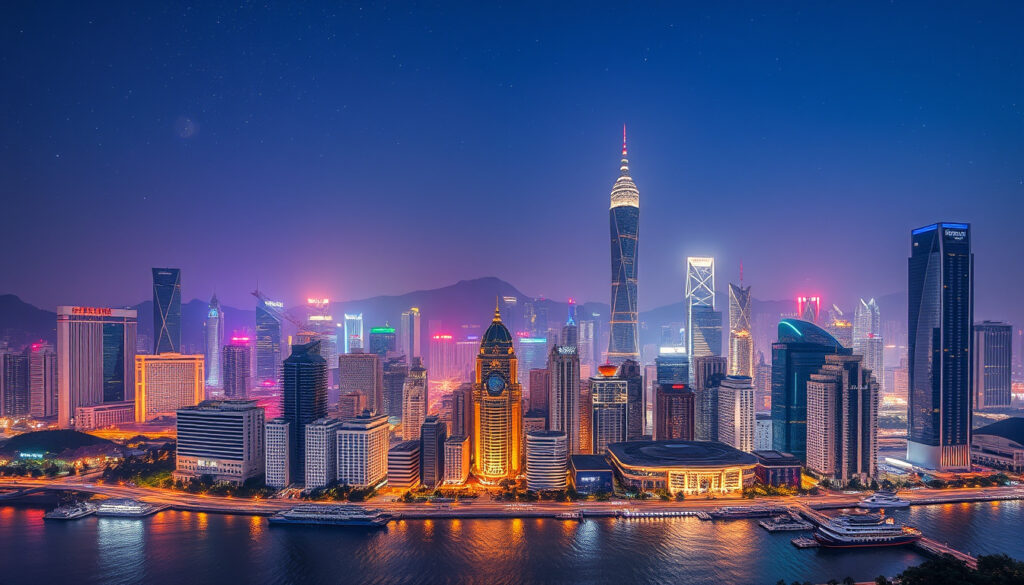
Where to Stay in Shenzhen: Best Areas for Tourists
Shenzhen spreads across 10 districts, but most visitors zero in on just three. Whether you’re crossing over from Hong Kong, chasing theme parks with the kids, or hunting for hotel deals, the right neighborhood shapes everything. This guide maps out Luohu, Futian, and Nanshan—the areas where tourists actually stay—based on what travel sources and verified data say about access, pricing, and vibe.
Top Recommended Areas: Luohu, Futian, Nanshan · Cheapest Hotels From: $12 · Main Tourist Districts: 3 · Airport Area Option: Bao’an · Beach Area Option: Dameisha
Quick snapshot
- Top 3 districts for tourists: Luohu, Futian, Nanshan (China Discovery)
- Luxury hotels in Luohu and Futian run 120–200 USD (China Highlights)
- Hotels in Shenzhen start from $12 for budget options (China Highlights)
- Exact walkability variance between districts beyond general impressions
- Current 2026 hotel pricing beyond reported ranges
- Seasonal impacts on accommodation availability and rates
- Luohu: original downtown, local feel, budget-friendly (Move and Stay)
- Futian: modern CBD, parks, expat-friendly (Baba Goes China)
- Nanshan: tech hub, theme parks, relaxed pace (Baba Goes China)
- Metro Lines 1 and 2 connect all three districts for easy day trips (Lets Travel to China)
- Families may consider split stays: Futian for city, Nanshan for theme parks (Baba Goes China)
- Luohu Port and Futian Checkpoint provide direct Hong Kong access (Lets Travel to China)
Which area is best to stay in Shenzhen?
Three districts dominate tourist accommodation choices: Luohu, Futian, and Nanshan. China Discovery confirms these three areas hold the highest concentration of hotels in the city, while China Highlights rates them as the primary recommendations for visitors. Each serves a distinct travel personality.
Luohu District
Luohu is Shenzhen’s original downtown—a distinction that shapes everything from street food to skyline. Move and Stay describes it as the area where the city’s history anchors the present: train station connections, older skyscrapers, and the sprawling Dongmen Pedestrian Street for bargaining shoppers. Hotels here skew budget-friendly, with luxury properties ranging 120–200 USD according to China Highlights. First-time visitors with Hong Kong day trips planned benefit from Luohu Port proximity. The nightlife skews toward local clubs and massage spots rather than expat bars, per Tripadvisor forums.
Luohu suits travelers prioritizing budget, authentic Chinese street culture, and direct border access over polished dining and nightlife.
Futian District
Futian functions as Shenzhen’s central business district—modern towers, urban parks, and the kind of metro network that makes car rental unnecessary. Baba Goes China highlights Lianhuashan Park as a green counterpoint to the office blocks, while Avenue One delivers upscale shopping. The Futian Checkpoint provides an alternative Hong Kong crossing point, and Tripadvisor discussions note more bars, pubs, and expat presence here than in Luohu. Luxury hotels including Park Hyatt and Ritz-Carlton target business travelers, with nightly rates matching Luohu’s 120–200 USD bracket per China Highlights.
Futian’s metro hub status makes it the most practical base for tourists planning day trips across Shenzhen or into Hong Kong without a car.
Nanshan District
Nanshan diverges from Luohu and Futian’s urban intensity. Baba Goes China describes a more relaxed pace anchored by technology—Tencent and DJI maintain headquarters here—and entertainment options like Window of the World and OCT Harbour. Shekou, a Nanshan neighborhood, draws families specifically: Tripadvisor forum advice points to the Hilton Hotel and Sea World area as family-friendly picks. International dining clusters around Sea World Plaza per Trip.com, while Shenzhen Bay Park offers coastal views.
The pattern holds: Nanshan attracts visitors who plan their Shenzhen stay around theme parks, beach access via Dameisha, or tech-company campus tours rather than border crossings.
Which area in Shenzhen to stay for tourists?
Proximity to attractions varies by district more than most visitors expect. Lets Travel to China recommends staying near metro stations in Luohu, Futian, or Nanshan for efficient access—Line 1 (Luobao) and Line 2 (Shekou) serve these core areas. Tourist-concentration data from China Discovery confirms the three-district clustering.
Proximity to attractions
Luohu attractions center on Dongmen Old Street, Luohu Commercial City, and Kingglory Plaza per Trip.com—all walkable from the district’s hotel core. Futian’s attractions skew toward green space (Lianhuashan Park) and corporate architecture (Ping An IFC, KK100). Nanshan concentrates theme-park magnetism: Window of the World, Happy Valley, OCT Harbour, and Shenzhen Bay Park cluster in or near this district per Trip.com.
Hotel concentrations
Luohu and Futian host half of Shenzhen’s top luxury hotels, with China Discovery noting Luohu alone claims that distinction. Budget travelers find more inexpensive options in Luohu near Dongmen, while Futian’s premium properties dominate the business-traveler segment. Nanshan’s hotel stock skews mid-range with family-oriented properties around Shekou.
Transport links
Metro connectivity ties all three districts together via Lines 1 and 2 according to Lets Travel to China. Hong Kong access splits between Luohu Port (east side, older crossing) and Futian Checkpoint (closer to Futian CBD). Bao’an Airport sits in the city’s western reaches, making an overnight in Bao’an practical only for red-eye arrivals or early departures.
The catch: Shenzhen’s geography rewards planning around your primary activity. Theme-park days belong in Nanshan. Hong Kong crossings favor Luohu or Futian. Business and nightlife lean Futian.
Best place to stay in Shenzhen with kids?
Nanshan District emerges as the family-specific recommendation across multiple sources. China Highlights and Baba Goes China both cite Window of the World and Happy Valley as Nanshan anchors for family travelers.
Nanshan options
Shekou, the western portion of Nanshan, specifically receives family mentions. Tripadvisor forum discussions recommend the Hilton Hotel Shekou for its Sea World proximity and international dining options. OCT Harbour offers evening boat rides and themed architecture that appeal to children, while Shenzhen Bay Park provides outdoor space for decompression.
Family-friendly neighborhoods
Nanshan Houhai, the newer financial district subsection, offers high-rise accommodations with shopping complexes but less green space per Lets Travel to China. Families prioritizing theme parks may benefit from a split-stay strategy: base in Futian for city attractions, then move to Nanshan for Window of the World days, as Baba Goes China suggests.
The trade-off: Nanshan’s relaxed pace and international dining come at the cost of Hong Kong border proximity. Families crossing to Hong Kong should factor transit time from Nanshan’s western position.
How many days do you need to spend in Shenzhen?
Most first-time visitors find 2–3 nights sufficient for a focused Shenzhen visit, according to China Discovery. This window covers major attractions in one district without rushing, or allows a day-trip to Hong Kong alongside local sights.
For first-timers
Two nights in either Luohu or Futian lets visitors hit Dongmen Pedestrian Street, a major park (Lianhuashan in Futian or Lizhi Park near Luohu), and the city-center shopping malls. Baba Goes China frames Luohu or Futian as ideal for first-timers due to central location and transit options. A third night enables either a Hong Kong day trip via Luohu Port or Futian Checkpoint, or a theme-park day in Nanshan.
Key sights coverage
Shenzhen’s tourist draw falls into three buckets: urban attractions (CBD skyline, parks, shopping), theme parks (Window of the World, Happy Valley, OCT Harbour), and border-tourism (Hong Kong day trips). Trip.com lists Window of the World, OCT Harbour, and Shenzhen Bay Park as Nanshan highlights alongside Luohu’s Dongmen and commercial complexes. Tech enthusiasts with Tencent or DJI visits on their agenda need at least a half-day in Nanshan per the company headquarters’ tourist interest.
What this means: pack your priorities before booking. A 2-night stay covering Luohu and Futian leaves no time for Nanshan’s theme parks or beaches without sacrificing elsewhere.
Is Shenzhen a walkable city?
Walkability in Shenzhen depends heavily on which district you’re exploring. Lets Travel to China and forum contributors note the city’s size and climate push most visitors toward metro reliance, but individual districts offer compact, pedestrian-friendly zones.
District walkability
Luohu’s older commercial core around Dongmen Pedestrian Street scores highest for pedestrian density—narrow streets, ground-floor shops, and market stalls encourage walking between attractions. Tripadvisor contributors describe Luohu as lively with locals, massage establishments, and walkable blocks. Futian’s CBD core—Ping An IFC, KK100, and Avenue One—spreads across broader avenues, making street-level exploration less intuitive despite the air-conditioned shopping centers. Nanshan’s Houhai district clusters high-rises with underground shopping networks, while the Shekou waterfront and Window of the World areas offer more pedestrian-friendly pathways.
Subway reliance
Metro Lines 1 and 2 connect the major tourist zones efficiently, per Lets Travel to China. Move and Stay describes Futian as offering “bustling urban lifestyle with shops, restaurants, and metro connectivity”—implying the transit system supplements rather than replaces foot exploration. Visitors should budget 15–30 minutes for district-to-district metro rides and plan hotel locations within walking distance of stations.
The implication: Shenzhen rewards visitors who accept the metro as their primary transport but walk freely within neighborhoods once there.
District comparison overview
Five dimensions distinguish the three primary stay districts. The comparison below highlights how each area stacks up across traveler priorities.
| Factor | Luohu | Futian | Nanshan |
|---|---|---|---|
| Target traveler | Budget, shopping, Hong Kong access | Business, metro-dependent, first-timers | Families, theme parks, tech culture |
| Price level | Budget to luxury, widest range | Mid-range to luxury, fewer budget options | Mid-range, family properties |
| Nightlife | Local clubs, massage spots | Bars, expat-friendly venues | Sea World dining, quiet evenings |
| Hong Kong access | Luohu Port (direct) | Futian Checkpoint (direct) | Requires metro to border |
| Unique draw | Dongmen shopping, authentic street food | Parks, CBD skyline, upscale shopping | Theme parks, tech HQ tours, beaches |
The pattern that emerges across travel sources is consistent: Shenzhen’s three primary tourist districts serve distinct traveler personalities, and mixing them in a single itinerary without clear prioritization risks missing what each does best.
Upsides
- Three distinct district personalities match most traveler types
- Metro network connects all tourist areas efficiently
- Luxury hotels at 120–200 USD offer competitive pricing for the region
- Budget hotels from $12 enable extended stays
- Direct Hong Kong border crossings from Luohu or Futian
Downsides
- City sprawls beyond walkable zones—metro reliance is essential
- Theme parks and Hong Kong access pull in opposite directions geographically
- Nanshan’s family-friendly character comes at the cost of border proximity
- Futian’s expat-friendly vibe raises bar prices compared to Luohu
- Summer heat and humidity limit midday walking between May and September
Expert perspectives
If you are paying your first visit to Shenzhen: Luohu District or Futian District.
— China Highlights (Travel Guide)
First-time visitors can’t go wrong with Futian—its central location and excellent metro connections make it perfect.
— Baba Goes China (Travel Blog)
Luohu is basically Shenzhen’s original downtown.
— Move and Stay (Relocation Guide)
For first-time visitors to Shenzhen, the choice between Luohu and Futian comes down to travel style. Those prioritizing shopping, authentic street food, and direct Hong Kong access lean toward Luohu. Business travelers, metro-reliant tourists, and those seeking parks alongside urban density find Futian’s modern CBD a better fit. Families, however, should reconsider: the moment theme parks enter the itinerary, Nanshan’s proximity to Window of the World and Shekou’s family infrastructure justifies the trade-off in border convenience.
Related reading: Singapore to Batam Ferry – Schedules Prices Guide 2025 · How to Measure Luggage Size – Step-by-Step Airline Guide
Travelers drawn to Shenzhen’s dynamic districts often find Chengdus best neighborhoods equally appealing for its fusion of ancient culture and modern vibrancy.
Frequently asked questions
What hotels are in Futian Shenzhen?
Futian hosts luxury properties including Park Hyatt Shenzhen and Ritz-Carlton Shenzhen, with rates typically in the 120–200 USD range for premium rooms. Mid-range options cluster near metro stations on Lines 1 and 2, per China Highlights.
When is the best time to visit Shenzhen?
October through December offers mild temperatures and lower humidity, making walking between attractions more comfortable. Summer months (June–August) bring heat and rain that push visitors toward air-conditioned malls and metro stations, per China Discovery.
Where is the main part of Shenzhen?
Luohu functions as the original city center, but Futian’s CBD has assumed the modern commercial hub role. Move and Stay describes Luohu as Shenzhen’s original downtown, while Baba Goes China identifies Futian as the central business district.
How to plan a Shenzhen tour?
Start by defining your primary purpose: Hong Kong border crossings favor Luohu or Futian hotels. Theme parks and family activities pull toward Nanshan. Two to three nights covers one district’s highlights; five nights enables a split-stay strategy hitting all three, per Baba Goes China.
What are top things to do in Shenzhen?
Top attractions span all three districts: Dongmen Pedestrian Street and Luohu Commercial City (Luohu), Lianhuashan Park and Avenue One shopping (Futian), Window of the World and OCT Harbour (Nanshan). Trip.com lists these as primary tourist draws.
Best areas for expats in Shenzhen?
Futian and Nanshan’s Shekou neighborhood attract the highest expat populations, with international restaurants, bars, and community services. Move and Stay notes Futian provides the most comprehensive expat infrastructure, while Shekou in Nanshan offers a quieter alternative.
Which Shenzhen district for first-time tourists?
First-timers should prioritize either Luohu (shopping and Hong Kong access) or Futian (CBD attractions and metro connectivity). Families targeting theme parks book Nanshan accommodations. China Discovery confirms these three districts as the primary tourist stay zones across all major travel sources.
More related posts
 DJI Osmo Pocket 3 Singapore: Price, Stock, Worth It
 How Often to Change Bed Sheets: Expert Guide on Frequency
 Gemini for Students Singapore: Free 1-Year Trial Guide
 Kim Soo Hyun Kim Sae Ron: Age, Unfollows, Investigation
 Can I Use WhatsApp in China 2026? VPN Guide for Tourists
 Windows 11 Home vs Pro: Key Differences and Which to Choose
 What to Eat in Bugis: Top Street Food & Halal Eats
 SG to India Currency – Latest Rate and Converter
