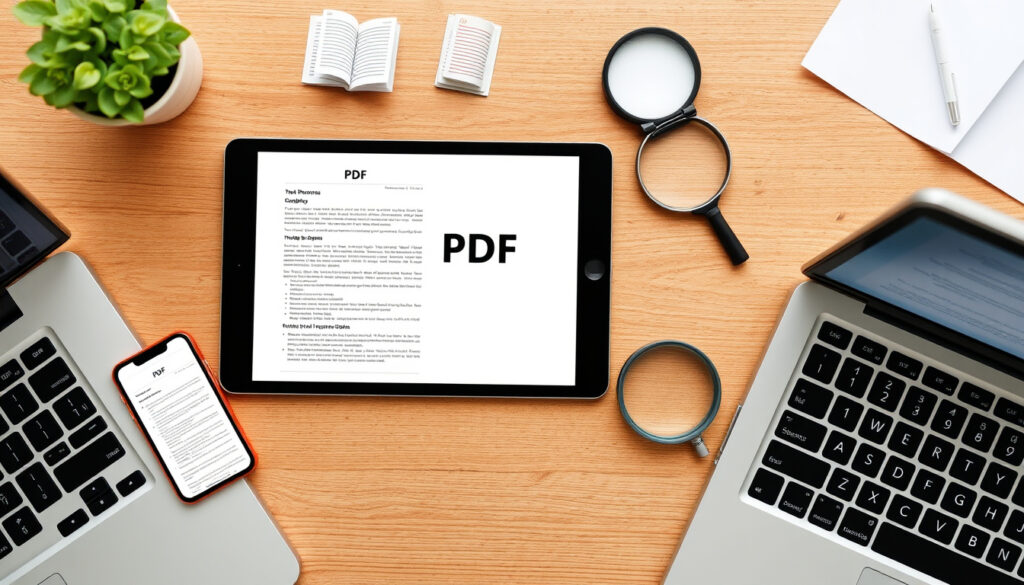
What Is a PDF Reader? A Guide for All Devices
You’ve probably tapped a PDF icon on your phone without thinking twice—maybe to open a tax form, a contract, or a recipe. That tap is powered by a piece of software called a PDF reader, and with Adobe Acrobat Reader alone racking up billions of installs, it’s worth understanding what a PDF reader actually does, whether you really need one, and how to pick one safely across desktop and mobile.
Most popular reader: Adobe Acrobat Reader (available on iOS, Android, desktop) ·
Privacy-first option: GrapheneOS PDF Viewer (zero network permissions) ·
Top free pick (TechRadar): Adobe Acrobat Reader for Android
Quick snapshot
- PDF readers are software applications for viewing and interacting with PDF files (Adobe, creator of the PDF format)
- Free versions exist and are widely used across platforms (TechRadar, a leading tech publication)
- PDFs can contain malware from untrusted sources (NowSecure, mobile app risk assessment firm)
- Whether built-in browser readers are sufficient for all users (Reddit community discussion)
- Which free reader offers the best balance of features and security (Tungsten Automation blog)
- The PDF reader market now spans desktop, mobile, and browser, with AI-powered features emerging (Denser.ai, tech comparison site)
- Growing preference for lightweight, permission-minimal readers and built-in device viewers (Reddit r/privacy discussion)
- Security risks from third-party reader apps are prompting more app vetting (NowSecure mobile risk analysis)
Key facts at a glance. Four core points, one theme: PDF readers have evolved from simple viewers to powerful document tools, but free options still dominate.
| Fact | Value |
|---|---|
| Most popular reader | Adobe Acrobat Reader (Adobe, PDF format creator) |
| Free readers with annotation | DocHub (TechRadar, tech review authority) |
| Privacy-focused reader | GrapheneOS PDF Viewer (GrapheneOS, security-focused OS) – zero permissions, no internet |
| Top Android pick (TechRadar) | Adobe Acrobat Reader (TechRadar) |
| AI-powered reader features | Search, read, mark, create, edit, sign, convert (Google Play listing: PDF Reader for Android) |
| Mobile reader risk | Some apps use third-party services that collect user data (Lonely Cat Games privacy policy) |
| Document interaction tool | Acrobat Reader is positioned as a tool to read, sign, comment, and interact (Adobe official site) |
| Best free reader with e-signatures | DocHub (TechRadar) |
What does a PDF reader do?
A PDF reader is a software application designed to open, display, and navigate PDF (Portable Document Format) files. Its core job is to render the document exactly as the creator intended—fonts, layout, graphics intact—across any device. Most readers also support zooming, scrolling, search, and print. But modern readers go beyond viewing.
Core functions: viewing, navigation, zooming
- Open PDFs from local storage, email attachments, or cloud services
- Page-by-page navigation, thumbnails, and continuous scroll
- Text search and copy (when permitted by the document)
Additional features: annotations, form filling, signatures
- Highlight, underline, note, and draw on documents (Adobe Reader supports commenting)
- Fill and sign PDF forms electronically (TechRadar notes DocHub includes editing and signing)
- Advanced features (editing, conversion) often require a paid version
Compatibility across devices
- Desktop: Windows, macOS, Linux
- Mobile: Android and iOS via dedicated apps
- Browser: Integrated viewers in Chrome, Firefox, Edge
The implication: knowing what a reader can do helps you choose the right tool for your needs.
Do I need to install a PDF reader?
You might already have one and not know it. Modern browsers and operating systems come with built-in PDF viewers. But a dedicated reader gives you more control.
When a PDF reader is necessary
- You need to fill out forms, add signatures, or leave comments
- You work with large documents and need advanced search or navigation
- You prefer offline access without browser dependency
Built-in readers in browsers and operating systems
- Chrome, Edge, Firefox, and Safari can open PDFs directly
- Windows 10/11 includes Microsoft Edge as default PDF viewer
- macOS has Preview for PDFs
- Android’s ‘Files’ app can open PDFs natively; iOS uses the built-in Books app or Quick Look
How to check if you already have one
- On Windows: right-click a PDF file → “Open with” – if Edge or Adobe Reader appears, you’re set
- On macOS: double-click a PDF – Preview or Books will open
- On Android: open any PDF through Files or a file manager
- On iOS: tap a PDF link in Safari or open from an email attachment
The catch: built-in viewers are fine for reading, but they won’t let you fill forms, sign, or annotate. If you do those tasks regularly, install a dedicated reader.
Is a PDF reader really free?
Yes—many reputable PDF readers are free for essential use. But “free” often comes with limits.
Free vs paid PDF readers
- Free: Viewing, printing, basic navigation, search, annotations (Adobe Acrobat Reader, Foxit Reader, SumatraPDF)
- Paid/subscription: Editing text/images, converting to Word/Excel, signing contracts, OCR (Adobe Acrobat Pro, Foxit PhantomPDF)
Features available in free versions
- Open and read PDFs
- Zoom, search, print
- Basic highlights and notes (varies by app)
- Form filling (sometimes limited)
Examples of free PDF readers
- Adobe Acrobat Reader – the industry standard with annotation and form-filling (Adobe official site)
- Foxit Reader – lightweight with collaborative features
- SumatraPDF – open-source, very small footprint
- DocHub – free with editing and e-signature support (TechRadar recommends DocHub)
Free readers are excellent for reading and light annotation. But if you regularly edit text or need OCR, expect to pay. For most individuals, free is enough—businesses often need the premium tier.
The catch: free readers serve most individuals, but businesses often need premium tiers.
Is the PDF reader app safe?
PDF files themselves are not dangerous—but they can carry embedded malware, and fake reader apps are a real threat.
How PDF files can carry viruses
- PDFs can contain JavaScript, executable attachments, or links to malicious sites
- Old or unpatched reader software may have vulnerabilities that attackers exploit (NowSecure highlights dangerous permissions in document-reader apps)
Risks of downloading fake reader apps
- Fake apps on unofficial app stores may steal data or install adware
- Some legitimate apps collect usage data through third-party services (Lonely Cat Games privacy policy acknowledges third-party data collection)
Best practices for safe PDF usage
- Only download readers from official stores (Google Play, Apple App Store, developer websites)
- Keep your reader software updated
- Use a privacy-focused reader like GrapheneOS PDF Viewer (zero permissions, no internet)
- Scan PDFs from unknown senders with antivirus software
The biggest risk isn’t the PDF format—it’s untrusted sources and poorly reviewed reader apps. Stick with well-known brands and always read the permissions your reader requests.
The pattern: sticking with official apps and basic permissions reduces risk.
What is a PDF reader on your phone?
A mobile PDF reader is an app that opens and lets you interact with PDFs on a smartphone or tablet. These apps are optimized for touchscreens and smaller screens.
How mobile PDF readers work
- Open PDFs from email, cloud storage (Google Drive, iCloud), or local downloads
- Support pinch-to-zoom, night mode, and reflow for easier reading
- Often include annotation and form-filling (e.g., Adobe Acrobat Reader mobile app) (Adobe official description)
Built-in options
- iOS: Preview within Safari, Books app, or Quick Look
- Android: Google PDF Viewer (part of Google Drive) or ‘Files by Google’ can open PDFs
Top mobile PDF reader apps
- Adobe Acrobat Reader – free, powerful, works across platforms (TechRadar’s top pick for Android)
- Foxit MobilePDF – lightweight with annotation
- Google PDF Viewer – simple, built-in, no extra app needed
- TNM Privacy PDF Viewer – ad-free, privacy-focused on Android (Google Play listing)
What this means: mobile readers are essential for productivity, but choose one that respects your privacy.
Pros and Cons of PDF Readers
Upsides
- Universal access: open any PDF on any device
- Free options cover basic reading and annotation
- Advanced features like e-signatures and form filling
- Lightweight offline operation
Downsides
- Free versions may include ads or limit features
- Some apps request unnecessary permissions (network, storage)
- Risk of malware if downloaded from untrusted sources
- Premium subscriptions can be costly for full editing
The pattern: the choice of reader depends on your priorities between features and privacy.
How to Choose and Use a PDF Reader Safely
- Identify your needs: Just reading? Use the built-in viewer. Need to annotate or sign? Get a free reader like Adobe Acrobat Reader.
- Download from official stores only: Google Play, Apple App Store, or the developer’s website.
- Check permissions: Avoid apps that request access to contacts, SMS, or internet without a clear reason. The GrapheneOS PDF Viewer proves you can read PDFs without any permissions (GrapheneOS privacy policy).
- Keep the app updated: Security patches are critical.
- Be cautious with PDFs from unknown senders: Scan with malware protection before opening.
The implication: following these steps minimizes risk.
Clarity: What We Know and What Remains Unclear
Confirmed facts
- PDF readers are software applications for viewing PDF files
- Free versions exist and are widely used
- PDFs can contain malware from untrusted sources
- Mobile readers are available on both major platforms
What’s unclear
- Whether built-in browser readers are sufficient for all users
- Which free reader offers the best balance of features and security
- How aggressive third-party data collection is in popular free readers
The pattern: the key is to match your needs to the right reader.
Expert Perspectives
“Acrobat Reader lets you read, sign, comment, and interact with any type of PDF file.”
– Adobe, official Acrobat Reader page
“A PDF reader is a software used to view, browse, and print PDF files.”
– Tungsten Automation (formerly Nuance), enterprise document solutions
“Privacy-focused PDF viewer for Android that uses no sensitive permissions.”
– GrapheneOS, privacy-focused OS
These voices highlight a spectrum: from full-featured corporate tools to privacy-first minimal viewers. The choice depends on what you value most.
For casual readers, any free reader works—but privacy-conscious users should pick an app that doesn’t phone home. Mobile users face the biggest trade-off between convenience and security.
The catch: choose according to your values.
Frequently asked questions
Can I edit a PDF with a free reader?
Some free readers allow basic editing (highlights, notes) but full text editing usually requires a paid version. DocHub offers limited editing for free (TechRadar review).
Do I need internet to use a PDF reader?
No, most PDF readers work offline once the file is downloaded. Some features (like cloud sync) require internet.
What is the best PDF reader for Android?
TechRadar names Adobe Acrobat Reader as the best for all-around use (2025 guide). For privacy, consider GrapheneOS PDF Viewer.
How to open a PDF on iPhone?
Tap the PDF link in Safari or the attachment in Mail – it opens in Quick Look. Or install Adobe Acrobat Reader from the App Store for more features.
What file formats can a PDF reader open?
Only PDF files (and sometimes encrypted PDFs). For other document types you need a separate app.
Can I use a PDF reader offline?
Yes, once the PDF is saved locally, no internet connection is required for viewing.
How to update a PDF reader?
On mobile, update via Google Play or the App Store. On desktop, check the application’s settings or download the latest version from the developer’s site.
Is there a PDF reader built into Windows 10?
Yes, Microsoft Edge can open PDF files. For more features, you can download Adobe Acrobat Reader or Foxit Reader.
More related posts
 DBS Savings Account Minimum Balance Guide
 The Providore Raffles Place: Closure, Menu, and What Happened
 Orchid Kamariah Yusof Ishak: First President’s Daughter
 Give Me Jesus Chords: Key of G, Progressions & Beginner Tips
 JC Cut Off Points 2025: L1R5 Guide for JC Admission
 Aubrey Anderson-Emmons – Age, Modern Family Role, 2025 Update
 One Battle After Another Reviews: Why Critics Are Divided (2025)
 Government Payout 2025 Eligibility: $700 Cash Guide
