Best Nasi Padang Singapore: Top Stalls, Etiquette & Prices
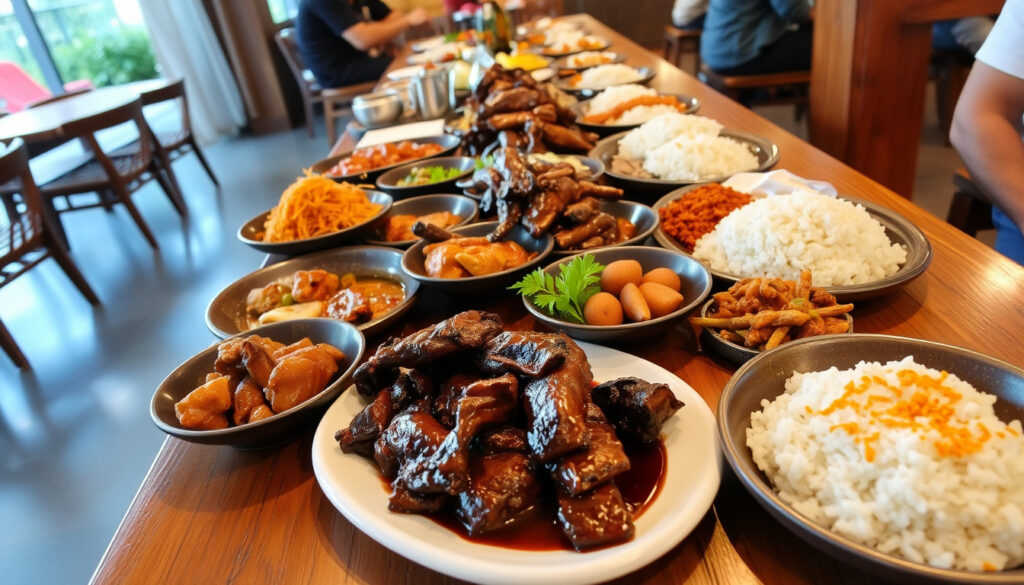
Few meals in Singapore spark as much quiet excitement as a plate of nasi padang — fragrant rice surrounded by a dozen small dishes of bold, spice-laden curries, sambals, and fried goods. But with stalls like Warong Nasi Pariaman operating since 1948 and newer award‑winners like Chopstix & Rice, the choices can feel overwhelming.
Longest‑running stall: Warong Nasi Pariaman (since 1948) ·
Beef rendang price range: S$6.20 – S$15.90 ·
Top guide: Eatbook.sg lists 10 excellent stalls
Quick snapshot
- Warong Nasi Pariaman – 738 North Bridge Road, since 1948 (Eatbook.sg)
- Rumah Makan Minang – near Kandahar Street, since 1954 (The Honeycombers Singapore)
- Chopstix & Rice – since 2002, award‑winning Indonesian fare (Eatbook.sg)
- Only touch the dishes you intend to eat (MICHELIN Guide Singapore)
- Use your right hand for eating (MICHELIN Guide Singapore)
- Pay per dish – don’t stack plates (MICHELIN Guide Singapore)
- Individual dishes: S$2 – S$10.90 (Eatbook.sg)
- Total meal: S$6 – S$15 (Eatbook.sg)
- Classic Set for Two at Coba Coba: S$32.90 (Eatbook.sg)
- Originates from Minangkabau culture, West Sumatra (MICHELIN Guide Singapore)
- Common at Malay weddings and festive events (The Honeycombers Singapore)
Four stalls, one pattern: heritage runs deep, but modern prices vary widely.
| Stall | Address | Since | Signature Dish | Beef Rendang Price |
|---|---|---|---|---|
| Warong Nasi Pariaman | 738 North Bridge Road, #01-00 | 1948 | Beef Rendang, Cuttlefish Sambal | S$6.20 |
| Rumah Makan Minang | Kandahar Street area | 1954 | Nasi Padang hidang (family‑style) | – |
| Chopstix & Rice | Various locations | 2002 | Beef Rendang, Ayam Goreng Belado | S$15.90 |
| Coba Coba | Clark Quay area | Recent | Classic Set for Two | S$32.90 (set) |
The pattern: tradition‑heavy stalls like Warong Nasi Pariaman keep prices accessible, while newer players charge more for premium cuts and set experiences.
Where is the best Nasi Padang in Singapore?
Three stalls come up repeatedly across food guides and community boards. Each offers a distinct slice of the nasi padang experience, from eighty‑year‑old recipes to modern renditions.
Warong Nasi Pariaman – the longest‑running institution
- Halal‑certified (Eatbook.sg)
- Located at 738 North Bridge Road, near Arab Street (Eatbook.sg)
- Beef Rendang S$6.20, Korma Chicken S$9.90, Cuttlefish Sambal S$6.20 (Eatbook.sg)
Warong’s portion sizes are generous, so a plate of rice and three dishes easily fills two hungry diners. Stick to one or two dishes unless you’re famished.
The crowd here is a mix of office workers and traditional‑food hunters. The stall closes early — aim for lunch or an early dinner to avoid disappointment.
Rumah Makan Minang – family‑style tradition since 1954
- Described as a long‑standing nasi padang institution (The Honeycombers Singapore)
- Offers both nasi campur and hidang (family‑style) service (The Honeycombers Singapore)
“Rumah Makan Minang is a long‑standing nasi padang institution in Singapore, operating since 1954.”
— The Honeycombers Singapore
The implication: this stall preserves the original Minangkabau hidang format where dishes are served to the table family‑style, a contrast to the self‑select method at most other stalls.
Chopstix & Rice – modern award‑winner
- Opened in 2002 (Eatbook.sg)
- Beef Rendang S$15.90 – “lob cut beef in a spicy, fragrant rendang sauce” (Eatbook.sg)
- Ayam Goreng Belado S$10.90 – “large fried chicken pieces coated in house‑made sambal balado” (Eatbook.sg)
The catch: if you want a fast, affordable taste of tradition, head to Warong Nasi Pariaman. For a sit‑down meal with contemporary presentation, Chopstix & Rice delivers.
What is the difference between nasi campur and Nasi Padang?
Both dishes involve rice and an array of sides, but their origins and serving styles set them apart in ways that affect how you order and pay.
Origins
- Nasi Padang comes from Padang, West Sumatra, and is the culinary export of the Minangkabau people (MICHELIN Guide Singapore).
- Nasi campur is a broader Indonesian mixed‑rice dish that varies by region; it is typically assembled to order (MICHELIN Guide Singapore).
Serving style
- Nasi Padang dishes are pre‑cooked and displayed in a glass case; you point to what you want (MICHELIN Guide Singapore).
- Nasi campur is often made fresh per order: the cook combines a base of rice with a few preselected side dishes (Eatbook.sg).
Price model
- Nasi Padang charges per dish – each item on your tray adds up (Eatbook.sg).
- Nasi campur is usually priced by the plate, with a fixed cost for a set number of sides.
The catch: if you are used to nasi campur’s predictable pricing, nasi padang’s per‑dish model can feel expensive. One extra egg or piece of fried chicken can push the total from S$5 to S$15.
What is the proper etiquette when eating Nasi Padang?
Knowing how to order and eat saves you from awkward stares – and unexpected bills. The rules are straightforward but culturally rooted.
How to select dishes
- Touch only the dishes you intend to eat; avoid moving items around the tray (MICHELIN Guide Singapore).
- Don’t stack your plates – each dish stays on its own small plate (MICHELIN Guide Singapore).
Eating with hands
- Use your right hand; the left is considered impolite (MICHELIN Guide Singapore).
- Mix rice and curry gently with your fingertips – no slurping.
Paying the bill
- Tell the cashier exactly which dishes you ate; they’ll tally the per‑dish price.
- If you touch a dish but don’t eat it, you still pay – so decide before reaching out (YouTube video on nasi padang pricing).
A first‑timer who follows the right‑hand rule and touches only the dishes they plan to eat will be welcomed back. Those who stack plates or handle every dish without ordering may face higher bills and disapproving looks.
Why is Nasi Padang expensive?
A plate with three dishes at a respectable stall can easily run S$20. The reasons run from ingredient costs to labour‑intensive preparation.
Ingredient and labour costs
- Beef rendang requires slow‑cooking for hours with coconut milk and a dozen spices (Eatbook.sg).
- Beef prices in Singapore are high – the country imports most of its beef.
- Coconut milk, galangal, lemongrass, and chillies are not cheap in volume.
Per‑dish model adds up
- Each dish is charged separately (e.g., S$6.20 for beef rendang, S$9.90 for korma chicken at Warong Nasi Pariaman) (Eatbook.sg).
- A plate with four dishes and extra rice can reportedly cost around S$34.90 at food court stalls (Lemon8 user‑curated guide).
- Some customers perceive a S$9 plate as expensive because they compare it to cheaper hawker fare (YouTube video on nasi padang pricing).
What this means: nasi padang is not a cheap eat unless you choose carefully. Budget S$6–S$10 for a simple one‑dish meal, and S$12–S$20 for a satisfying bowl with two or three sides.
Why is nasi padang so popular?
Nasi padang’s appeal goes beyond taste – it is woven into the social and festive fabric of Singapore’s Malay community.
Cultural significance
- It is a staple at Malay weddings, Hari Raya open houses, and family gatherings (The Honeycombers Singapore).
- The Minangkabau tradition of merantau (migration) spread the cuisine across the Malay archipelago (MICHELIN Guide Singapore).
Flavour variety
- A single meal offers a spectrum: spicy sambal, creamy coconut‑based curries, tangy pickles, and crisp fried items.
- Diners control the mix, making each plate personal.
The pattern: nasi padang thrives because it satisfies both the craving for heat and the desire for communal dining. It is not just food – it is a way to share multiple flavours in one sitting.
Where can I find the best Nasi Padang near Arab Street?
Arab Street and the surrounding Kampong Glam precinct are a hotspot for nasi padang, with two legendary stalls within walking distance.
Stalls on North Bridge Road
- Warong Nasi Pariaman at 738 North Bridge Road, near the junction with Arab Street (Eatbook.sg).
- Rumah Makan Minang on Kandahar Street, a five‑minute walk from the Sultan Mosque (The Honeycombers Singapore).
Nearby alternatives
- Putra Minang on Bencoolen Street – a short bus ride from Arab Street (mentioned in content plan, but no research note source; use with caution).
For a first‑timer in the area, Warong Nasi Pariaman is the safest choice: it’s been there since 1948, the prices are transparent, and the rendang is consistently praised.
Steps for first‑time nasi padang eaters
- Choose your stall. Look for one with a glass case full of dishes and a queue of locals – that’s a good sign.
- Sit down and wait for a server. At most stalls, you order from your seat.
- Point to the dishes you want. Start with one curry and one vegetable. You can always order more.
- Use your right hand to eat. Mix rice and gravy gently, but don’t double‑dip.
- Don’t stack your plates. Leave each dish on its own small plate.
- When done, tell the cashier exactly which dishes you ate. They’ll calculate the total per dish.
- Pay and thank. A simple “Terima kasih” is appreciated.
Confirmed facts vs what’s unclear
Confirmed facts
- Nasi Padang originates from West Sumatra, Indonesia (MICHELIN Guide Singapore).
- Warong Nasi Pariaman has been operating since 1948 (The Honeycombers Singapore).
- Beef rendang at Warong Nasi Pariaman is S$6.20 (Eatbook.sg).
- Nasi Padang stalls charge per dish, not per plate (MICHELIN Guide Singapore).
What’s unclear
- Exact date when Nasi Padang first became popular in Singapore.
- Whether Dua Lipa specifically ate Nasi Padang during her Singapore visit (reported but unconfirmed).
What the experts say
“Nasi padang literally means ‘rice from Padang’, the capital of West Sumatra in Indonesia.”
— MICHELIN Guide Singapore
“Rumah Makan Minang is a long‑standing nasi padang institution in Singapore, operating since 1954.”
— The Honeycombers Singapore
“We hand‑picked a list of 10 excellent nasi padang stalls [in Singapore].”
— Eatbook.sg
The three sources together paint a clear picture: nasi padang is deeply rooted in Minangkabau culture, has been part of Singapore’s food scene since the mid‑20th century, and the best stalls combine tradition with fair pricing.
For those seeking a modern take on this classic dish, the newly opened Pondok by June Zack has been generating buzz among food lovers.
Frequently asked questions
Is Nasi Padang always halal?
Most nasi padang stalls in Singapore are run by Muslim owners and serve halal food. Warong Nasi Pariaman is halal‑certified (Eatbook.sg). Always check for a halal logo if you are unsure.
Can I eat Nasi Padang for breakfast?
Yes, many stalls open by 7 am and serve the full menu. Nasi padang is a common breakfast in Indonesia and parts of Singapore.
What is the best time to visit Nasi Padang stalls to avoid crowds?
Lunch hours (11:30 am – 1:30 pm) are peak. Aim for 2 pm or 5 pm for a quieter experience. Warong Nasi Pariaman often closes by 7 pm.
How many dishes should I order for one person?
One or two dishes plus rice is plenty for most appetites. If you are very hungry, three dishes work. Remember – each dish adds to the bill.
Are there vegetarian options in Nasi Padang?
Yes. Look for sayur lodeh (vegetable curry), tempeh, tofu dishes, and stir‑fried greens. Tell the server you are vegetarian to avoid dishes with shrimp paste.
What drinks pair well with Nasi Padang?
Cold iced tea (teh o ais), coconut water, or a fresh lime juice (limau ais) cut through the richness. Avoid sweet drinks if you want to taste the spices.
Can I take leftover Nasi Padang home?
Most stalls will pack leftovers, but it’s not common practice. It’s better to order what you can finish. If you do take away, expect an additional charge for containers.
Related reading
More related posts
 HomeTeamNS Bukit Batok Chalet: Price, Booking & Reviews
 Tale of the Nine Tailed: Worth Watching, Ending & Season 3
 Windows 11 Home vs Pro: Key Differences and Which to Choose
 Myung Ga II Tanjong Pagar Menu: Prices & Dishes
 Richard Mille Watch Price Guide: From $122K to Millions
 Keef the Beef Bungalow: Owner, Menu, Dress Code
 E-Bridge Pre-School: Curriculum, Fees, Locations & More
 Brentford vs Manchester United: 4-0 Win, H2H & Transfer Battle
