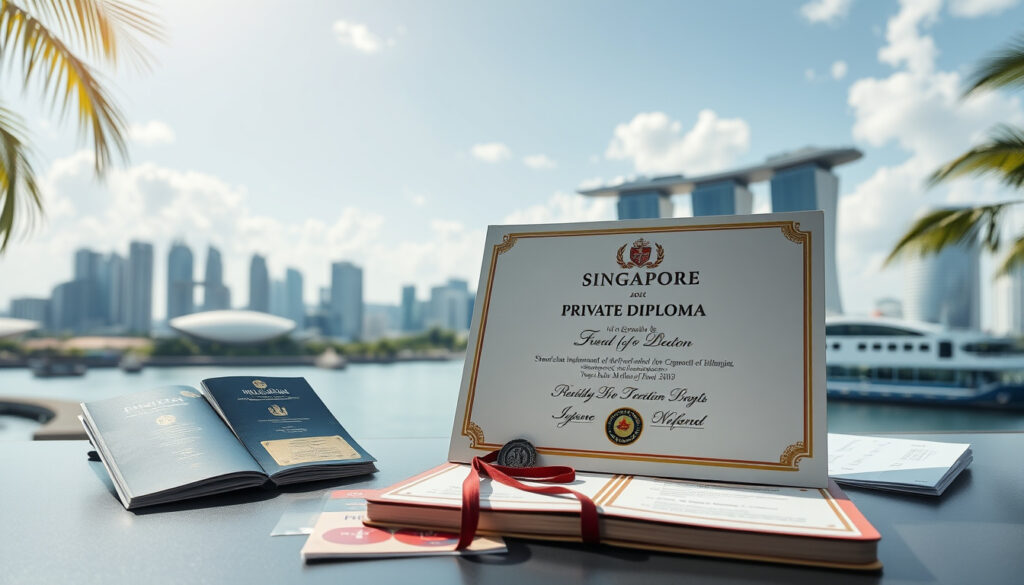
Private Diploma in Singapore: Fees, Recognition & Best Courses
If you’re considering a qualification that fits around work or costs less than a three-year polytechnic programme, a private diploma in Singapore deserves a close look. These awards from private education institutes can be earned in under a year, often cost a fraction of what you’d pay overseas, and several are recognised by SkillsFuture Singapore — the same body that sets quality standards for public training. Below is a practical breakdown of how the system works, what you’ll actually pay, and which courses tend to give graduates the steadiest footing in Singapore’s job market.
Top Providers: PSB Academy, Kaplan, MDIS, Addison Institute, Nanyang Learning · Study Modes: Full-time, Part-time · Target Skills: Industry-relevant · Short Options: 6 months courses available
Quick snapshot
- Private diplomas from listed providers (PSB Academy, Kaplan, MDIS)
- Addison Institute holds current SSG recognition
- PSB diplomas completable in 9–15 months (PSB Academy)
- Exact total fees for most providers without contacting them directly
- Specific recognition status with employers outside Singapore
- Updated 2026 fee schedules for private PEIs beyond Addison
- Ngee Ann Polytechnic published AY2026 fees for international students
- Addison offers accelerated diplomas in 10 months (Addison Institute)
- PSB diplomas open doors to universities in Australia, New Zealand, and the UK (PSB Academy)
- MDIS welcomes students of all nationalities for full-time, part-time, and online programmes (MDIS)
| Label | Value |
|---|---|
| Main Providers | PSB Academy, Kaplan, MDIS, SIM Global Education, Amity |
| Modes Offered | Full-time, Part-time |
| Focus | Industry-relevant skills |
What is a private diploma?
A private diploma is a qualification awarded by a Private Education Institute (PEI) rather than a government-funded polytechnic or university. These programmes tend to run shorter — typically six months to a year and a half — and focus on practical, industry-relevant skills rather than broad academic theory.
Difference from public diplomas
Public polytechnics in Singapore offer three-year, government-subsidised diplomas primarily designed for school-leavers. Private diplomas, by contrast, are self-financed and operate on a commercial model. There is no government fee subsidy, but programmes are often more flexible for working adults or international students who need a quicker path to qualification. One practical difference: public polytechnic places for international students are limited and competitive, while private PEIs generally accept applications year-round from any nationality.
Providers like PSB Academy and Kaplan
Leading providers include PSB Academy, which offers diplomas across 14 disciplines and allows graduates to progress to universities in Australia, New Zealand, and the UK. Kaplan Singapore provides accredited programmes through university partnerships, while MDIS focuses on industry-relevant skills and accepts students of all nationalities. SIM Global Education pairs industry-focused courses with access to more than 80 programmes across its international university partners.
Private diplomas are not second-tier by default. Addison Institute, for instance, holds SkillsFuture Singapore recognition — the same quality benchmark applied to public training providers. Recognition depends on the specific provider and programme, not on whether the institution is public or private.
How much does a diploma cost in Singapore?
Private diploma tuition fees in Singapore typically range from S$4,000 to S$12,000 total, according to education guides covering multiple providers. This is notably lower than the annual fees charged by public polytechnics for international students — Ngee Ann Polytechnic lists AY2026 fees of S$12,400 annually for ASEAN students, with non-ASEAN rates running higher.
Private diploma fees range
At the lower end, Addison Institute’s Diploma in Hospitality Management starts at S$225 per month, completable in approximately 12 months for a total around S$2,700 in tuition. Amity Global Institute charges an application fee of S$450 for international students (versus S$150 for local applicants), with no difference in total course fees between the two groups. PSB Academy lists diplomas in 14 disciplines with durations of 9–15 months, with exact fees typically provided upon enquiry. One guide puts the upper range for private college diplomas at SGD 15,000 to 30,000 total, though this figure appears to cover longer or more premium programmes.
Factors affecting cost
What you pay depends on several variables: the provider’s standing and accreditation level, whether the programme includes an industry attachment or internship, the discipline (hospitality and business courses tend to be less expensive than technology or healthcare programmes), and whether you study full-time or part-time. Some providers charge separately for examination fees, materials, or student services, so it’s worth requesting a full fee breakdown before committing.
Public polytechnics charge more per year but receive government subsidies that local students benefit from. For international students paying full fees, the 3-year public diploma can cost roughly three times what a comparable private diploma programme runs — but the longer duration and broader curriculum may suit some career paths better.
Is a private diploma recognised?
Yes — but recognition depends on the specific provider and the context in which you plan to use the diploma. Private diplomas from established PEIs such as MDIS, Addison Institute, and PSB Academy carry accreditation from their university partners, and several are registered with SkillsFuture Singapore (SSG), the national skills development authority.
Recognition bodies
SkillsFuture Singapore (SSG) is the primary quality assurance body for private education in Singapore. Providers recognised by SSG have met standards for curriculum, faculty, and student support. Addison Institute’s SSG recognition, for example, means graduates hold a qualification that Singapore employers are familiar with and that aligns with national skills frameworks. Beyond SSG, individual diplomas may carry accreditation from university partners — Kaplan’s programmes, for instance, are validated by its university partners.
Use for jobs and further study
In the Singapore job market, employers typically evaluate diplomas based on the institution’s reputation and whether the programme is accredited. According to MDIS, their diplomas are “recognised internationally” — though specific recognition by employers outside Singapore varies by industry and country. For further study, PSB Academy diplomas explicitly allow progression to universities in Australia, New Zealand, and the UK, giving graduates a clearer pathway to degree-level qualifications.
Not all private diplomas carry the same weight with every employer. When evaluating a programme, check whether the provider is SSG-registered and whether the specific programme is listed on the SkillsFuture Singapore course directory. These details signal that the qualification has been reviewed against national standards.
How long is a diploma in Singapore?
Unlike the three-year full-time polytechnic model, private diplomas in Singapore typically run between six months and 15 months depending on the provider, programme, and study mode. This shorter timeline is one of the main reasons international students and working professionals choose private pathways.
Typical timelines
PSB Academy lists diplomas completable in 9–15 months when excluding industry attachments. Addison Institute offers accelerated options that can be finished in 10 months. Nanyang Learning provides a Diploma in Business that can be completed in six months, while its Hospitality programme runs nine months plus a six-month attachment. Part-time programmes naturally extend the duration — a course that takes nine months full-time might stretch to 18 months if studied evenings or weekends.
6 months options for foreigners
Several providers market six-month diploma options specifically to international students seeking a fast route to a qualification. According to education guides covering Singapore’s private sector, the typical structure is six months of classroom study followed by an optional internship or attachment period. For students on a Student Pass, an attachment can count toward practical experience requirements while extending the programme’s duration.
Six-month programmes are intensive. If you need time to settle into Singapore, handle visa arrangements, or acclimatise to a new academic culture, build at least one additional month into your timeline. Providers like Nanyang Learning and Addison accommodate flexible start dates, which can smooth the transition.
Which diploma course is best for a job in Singapore?
Job-readiness depends less on the provider’s prestige and more on whether the programme aligns with sectors that are actively hiring. In 2025 and moving into 2026, healthcare, digital technology, hospitality, and business analytics are among the fields where employers consistently seek candidates with diploma-level qualifications.
Best for international students
For international students planning to work in Singapore after graduation, a programme with an industry attachment built in offers a practical advantage. PSB Academy structures its diplomas with attachments, giving students direct workplace exposure before they graduate. MDIS and SIM Global Education similarly emphasise industry-relevant skills and maintain partnerships with employers through career services. These attachments can sometimes lead to employment offers if the employer is impressed.
Top courses in 2025
Based on programme availability and employer demand signals from the Singapore market, the following areas tend to offer the clearest job pathways for private diploma graduates: Business Administration and Management, Hospitality and Tourism Management, Information Technology and Digital Skills, Healthcare Support, and Logistics and Supply Chain Management. PSB Academy covers most of these disciplines across its 14 programmes, while MDIS and Kaplan offer specialisations in business and management. SIM Global Education pairs industry-focused diplomas with access to further degree pathways for graduates who want to deepen their qualifications over time.
Upsides
- Programmes complete in 6–15 months, faster than public polytechnics
- Tuition typically S$4,000–S$12,000 total, more affordable than overseas study
- Several providers accepted international students year-round
- PSB and MDIS diplomas allow progression to international universities
- Full-time, part-time, and online modes available to suit working schedules
Downsides
- No government subsidy — international and local students pay the same fees
- Recognition varies by employer and industry; not universal
- Exact total fees often require direct enquiry from providers
- Short programmes are intensive and may not suit all learning styles
- Public polytechnic diplomas carry stronger brand recognition with some Singapore employers
“Tuition fees typically range from S$4,000 to S$12,000 depending on the institution and course. Compared to the USA, UK, or Australia, this makes Singapore highly cost-effective.”
— StudySingapura (Education Guide, studysingapura.com)
“Most definitely.”
— MDIS, on whether private diplomas are recognised in Singapore (mdis.edu.sg)
“However, there are no differences in total payable course fees between local and international students.”
— Amity Singapore (Official Website, amitysingapore.sg)
For international students weighing a private diploma in Singapore, the practical value is clear: a recognised qualification in under a year, at a cost that undercuts comparable programmes in the UK, Australia, or the US. The trade-off is that recognition with some employers — particularly in government-adjacent sectors — may require extra steps such as SkillsFuture Singapore course verification or additional certifications. The decision ultimately hinges on your career target and whether the employer landscape you’re entering values speed and industry relevance over institutional brand.
Related reading: Student Monthly Concession Pass · ITE School Holiday 2026
Frequently asked questions
Can foreigners apply for private diplomas in Singapore?
Yes. Providers like MDIS, PSB Academy, Addison Institute, and Amity accept international students of all nationalities. You’ll typically need a Student Pass if studying full-time, which the PEI can assist with through their admissions process. Part-time and online options may be available for students already residing in Singapore.
What are the entry requirements for private diplomas?
Requirements vary by provider and programme, but most private diplomas accept students who have completed secondary education (O-Levels or equivalent). Some programmes may require a pass in specific subjects, English language proficiency, or relevant work experience. Amity, for example, charges an application fee of S$450 for international students — confirm the specific requirements with each provider directly.
Are online private diplomas available?
Several providers offer online or hybrid study options. Kaplan lists full-time, part-time, and online delivery modes for its diploma programmes. PSB Academy also notes online options alongside its campus-based offerings. However, if your programme includes an industry attachment, you will need to be physically present in Singapore for that component.
Do private diplomas lead to degrees?
Yes — many private diploma holders progress to bachelor’s degrees. PSB Academy explicitly lists progression pathways to universities in Australia, New Zealand, and the UK. SIM Global Education partners with more than 10 international universities across 80+ programmes. The specific credit recognition depends on the university and the programme, so check whether your diploma qualifies for direct entry or requires additional bridging.
What jobs can private diploma holders get?
Graduates are typically competitive for entry-level roles in business administration, hospitality, healthcare support, IT, and logistics. Because private diplomas emphasise practical skills and often include industry attachments, graduates may have an edge in roles that value immediate workplace readiness. Job prospects vary by sector and employer — sectors with high demand for skilled workers, such as hospitality and digital technology, tend to offer more entry points.
How to choose the best private diploma provider?
Three factors matter most: whether the provider is recognised by SkillsFuture Singapore, whether the specific programme is accredited by a university partner, and whether the programme includes an industry attachment or internship. For international students, also check whether the provider offers application support for Student Passes and whether the programme start dates align with your timeline. Comparing these details across PSB Academy, Kaplan, MDIS, SIM, and Amity will typically reveal which provider best fits your specific goals.
More related posts
 One Battle After Another Reviews: Why Critics Are Divided (2025)
 Divorce Lawyer in Singapore: Costs, Timeline & Entitlements
 EZ-Link Motoring Card: Buy, Use & Top Up Guide Singapore
 How to Unsend Email in Outlook: Recall a Sent Message (2026)
 PSB Academy Cathay Campus: Location, Fees & Reviews
 How to Draw a Dragon: Easy Step-by-Step Guide for Beginners
 Donald Trump Jr.: Net Worth, Relationships & Health Update
 Um Yong Baek Menu – Prices, Reviews, Location & Tips
