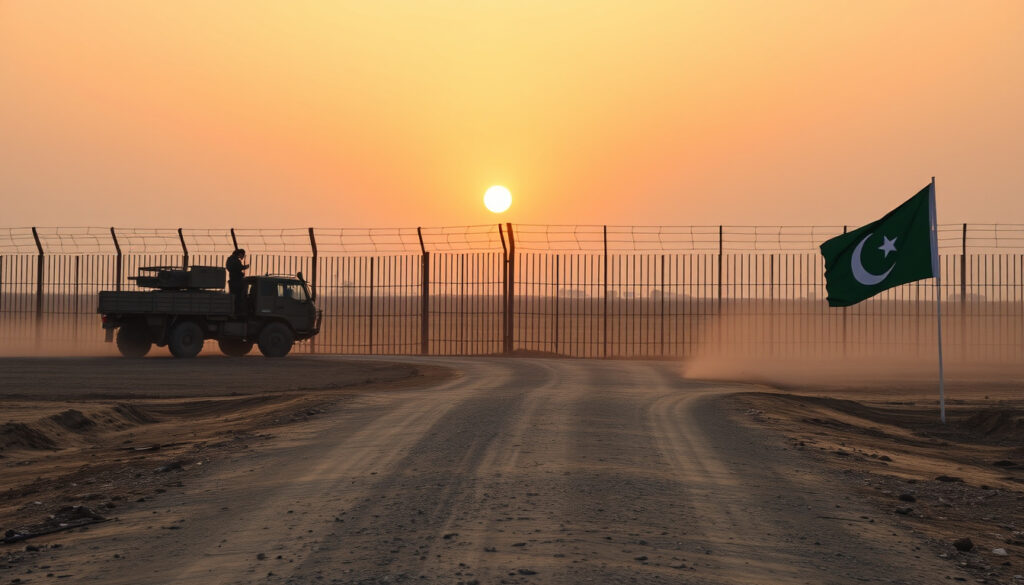
India Pakistan Latest News: Current Situation & Military Power
For decades, the India-Pakistan relationship has swung between tense standoffs and fragile ceasefires. The latest chapter, a four-day conflict in May 2025, was described by analysts as the most serious military crisis in decades between the two nuclear-armed neighbors.
India’s population (2024): 1.4 billion ·
Pakistan’s population (2024): 240 million ·
India’s defense budget (2025): $76 billion ·
Pakistan’s defense budget (2025): $7.6 billion ·
India’s nuclear warheads (2024): ~164 ·
Pakistan’s nuclear warheads (2024): ~170
Quick snapshot
- India and Pakistan fought a four-day conflict from May 7–10, 2025 (Stimson Center, a Washington-based think tank).
- Both countries possess nuclear weapons (SIPRI, an independent research institute).
- China is Pakistan’s largest economic and military partner. (Stimson Center, a Washington-based think tank)
- A ceasefire was agreed on May 10, 2025 (Al Jazeera, a major news network).
- Exact number of casualties in Operation Sindoor.
- Whether the ceasefire will hold long-term.
- Whether a major war will occur in 2026.
- The outcome of ongoing diplomatic efforts.
- April 22, 2025: Pahalgam attack kills 26 tourists (Wikipedia, an open encyclopedia).
- May 7–10, 2025: Four-day military conflict (Stimson Center, a Washington-based think tank).
- May 10, 2025: Ceasefire announced (Al Jazeera, a major news network).
- US think tank warns of possible armed conflict in 2026 (Stimson Center, a Washington-based think tank).
- One year on, the ceasefire holds but diplomacy remains frozen (BBC News, a public service broadcaster).
- Underlying Kashmir dispute unresolved. (Stimson Center, a Washington-based think tank)
The table below lays out the key comparative metrics that define the India-Pakistan rivalry.
| Attribute | India | Pakistan |
|---|---|---|
| Capital | New Delhi | Islamabad |
| Official languages | Hindi | Urdu |
| Population (2024) | 1.4 billion | 240 million |
| GDP (2024, nominal) | $3.7 trillion | $0.38 trillion |
| Military rank (Global Firepower 2025) | 4th | 7th |
| Nuclear warheads (SIPRI 2024) | ~164 | ~170 |
What is the current situation between India and Pakistan?
The ceasefire that ended the May 2025 conflict has held technically, but it has not translated into broader stability. One year later, a US think tank warns that the region faces a significant risk of armed confrontation in 2026.
Status of cross-border violence
- After the May 2025 ceasefire, reports of explosions and ceasefire violations continued (Al Jazeera, a major news network).
- One year later, the ceasefire remains technically in effect, but Chatham House, a leading policy institute, assesses it as “shaky” with relations unlikely to return to the previous status quo.
Ongoing peace talks
Diplomacy and trust remain frozen a year after the conflict, according to BBC News, a public service broadcaster. No formal bilateral dialogue has resumed.
State of diplomatic relations
- Both sides have hardened positions. New Delhi stated that “the rules of engagement have irreversibly changed” (The Washington Post, a leading US newspaper).
- Pakistan claims the ceasefire reestablished deterrence (The Washington Post, a leading US newspaper).
What this means: The ceasefire stopped active fighting but did nothing to address the underlying Kashmir dispute or rebuild trust. The region remains in a holding pattern, with both sides claiming victory while preparing for the next crisis.
Has the India-Pakistan war finished?
The military conflict of May 2025 was brief but intense, and its conclusion has not resolved the fundamental disputes between the two nations.
Duration of the 2025 conflict
- The conflict lasted four days — from May 7 to May 10, 2025 (Stimson Center, a Washington-based think tank).
Main military actions
- India’s military campaign was codenamed Operation Sindoor (Wikipedia, an open encyclopedia).
- The conflict included cross-border airstrikes and artillery exchanges, with India reportedly achieving air superiority (video analysis on YouTube — note: low-confidence claim).
Outcome of the war
The conflict ended with a ceasefire on May 10, but territorial changes and casualty figures remain disputed. Chatham House, a leading policy institute, notes that the ceasefire did not resolve the underlying disputes.
The implication: The war is over in the sense that active hostilities ceased, but the state of “no war, no peace” that characterized the pre-2025 period may no longer hold. The rules of engagement have changed, and the next crisis could erupt with little warning.
Which military force is stronger, India or Pakistan?
When comparing raw numbers, one pattern emerges: India maintains a clear advantage in personnel, budget, and conventional equipment, while Pakistan compensates with nuclear parity and niche naval assets.
These comparative figures illustrate the scale of the military disparity between the two nations.
| Category | India | Pakistan |
|---|---|---|
| Global Firepower rank (2025) | 4th | 7th |
| Total military personnel | 5,137,550 (Al Jazeera, a major news network) | 1,704,000 (Al Jazeera, a major news network) |
| Defense budget (2025) | $76 billion | $7.6 billion |
| Nuclear warheads (2024) | ~164 | ~170 |
| Main battle tanks | 4,215 (ArmedForces.eu, a defense analytics site) | 1,504 total aircraft (ArmedForces.eu, a defense analytics site) |
Active personnel comparison
- India’s military is roughly three times larger than Pakistan’s in total personnel (Al Jazeera, a major news network).
Defense expenditure
- India’s defense budget is ten times that of Pakistan’s, reflecting its larger economy and broader strategic ambitions.
Nuclear capabilities
- Both countries maintain roughly comparable nuclear arsenals, though India’s delivery systems are more diverse.
Naval strength: China-made submarines
- Pakistan’s navy has been boosted by the acquisition of Chinese submarines, a key element of its naval deterrence (Al Jazeera, a major news network mentions China’s role).
The trade-off: India’s conventional superiority gives it the ability to escalate a conflict, but Pakistan’s nuclear deterrent — and its willingness to use tactical nuclear weapons if overwhelmed — creates a dangerous asymmetry. The 2025 crisis tested that balance, and both sides now recalibrate their doctrines.
How many terrorists died in Operation Sindoor?
Determining the exact toll from India’s military operation remains difficult, as official claims and independent verification diverge sharply.
What was Operation Sindoor?
Operation Sindoor was the codename for India’s military campaign in the May 2025 conflict, launched as retaliation for the April 22, 2025 Pahalgam attack that killed 26 tourists (Wikipedia, an open encyclopedia).
Official Indian government death toll
India claimed that a specific number of terrorists were killed during the operation, but exact figures have not been independently verified and remain disputed.
Pakistan’s response and denial
- Pakistan denied involvement in the Pahalgam attack and rejected the casualty numbers provided by India (Wikipedia, an open encyclopedia).
International reaction
International observers called for restraint as the crisis unfolded.
The catch: Without independent verification, the death toll from Operation Sindoor remains a point of intense dispute, fueling propaganda on both sides and complicating any future path to accountability.
Who is Pakistan’s biggest friend?
Pakistan’s foreign policy has long been shaped by its rivalry with India, driving it to forge powerful alliances that counterbalance its larger neighbor.
Pakistan’s relationship with China
- China provides economic and military support to Pakistan, including through the China-Pakistan Economic Corridor (CPEC).
Pakistan’s relationship with Saudi Arabia
- Saudi Arabia is a key economic and diplomatic partner, providing financial assistance and energy supplies to Pakistan.
Pakistan’s relationship with Turkey
- Turkey has close defense ties with Pakistan through joint exercises and arms deals.
Strained US-Pakistan ties
- US-Pakistan relations have deteriorated over differing geopolitical interests, particularly regarding Afghanistan and the war on terror.
What this means: China has become Pakistan’s most reliable strategic partner, providing the military and economic lifeline that allows Islamabad to resist Indian pressure. This trilateral dynamic — India, Pakistan, and China — forms the core of South Asian geopolitics.
Related reading: India Pakistan Latest News: Tensions, Military Comparison & Updates 2025
Frequently Asked Questions
What is the Line of Control?
The Line of Control (LoC) is the military control line between the Indian and Pakistani controlled parts of the former princely state of Jammu and Kashmir. It was established after the 1972 Simla Agreement and serves as the de facto border, though neither country recognizes it as an international boundary.
Why do India and Pakistan fight over Kashmir?
Both India and Pakistan claim the former princely state of Jammu and Kashmir in its entirety. India controls the southern and eastern portions, while Pakistan controls the northern and western areas. The dispute dates back to the 1947 partition of British India and has been the cause of multiple wars and recurring crises.
What is the role of the United Nations in the conflict?
The United Nations has passed resolutions calling for a plebiscite to determine the will of the Kashmiri people, but these have not been implemented. The UN Military Observer Group in India and Pakistan (UNMOGIP) monitors the ceasefire along the LoC, but its role is limited to observation and reporting.
What is the current status of trade between India and Pakistan?
Trade between India and Pakistan is minimal due to political tensions. India revoked Pakistan’s Most Favored Nation (MFN) status in 2019 after the Pulwama attack, and bilateral trade has been largely suspended since then, with only limited humanitarian and essential goods crossing the border.
How do India’s and Pakistan’s nuclear doctrines differ?
India maintains a “no first use” (NFU) nuclear doctrine, committing to only use nuclear weapons in retaliation. Pakistan, facing conventional inferiority, has not adopted an NFU policy and is believed to rely on tactical nuclear weapons as a deterrent against a large-scale conventional attack from India.
More related posts
 Car Rental New Zealand 2025: Cheapest & Best Companies Compared
 SG to India Currency – Latest Rate and Converter
 Dyson Hair Dryer Promotion Singapore: Best 2025 Deals
 Chiam See Tong Illness: Stroke, Hip Injury Updates
 Apple iPhone 17 Release Date: September 2025 Launch
 One Battle After Another Reviews: Why Critics Are Divided (2025)
 Cathay Cineplex Causeway Point: Closed, SAS Cineplex Now Open
 Sengkang Hospital Appointment Hotline: Numbers & More
