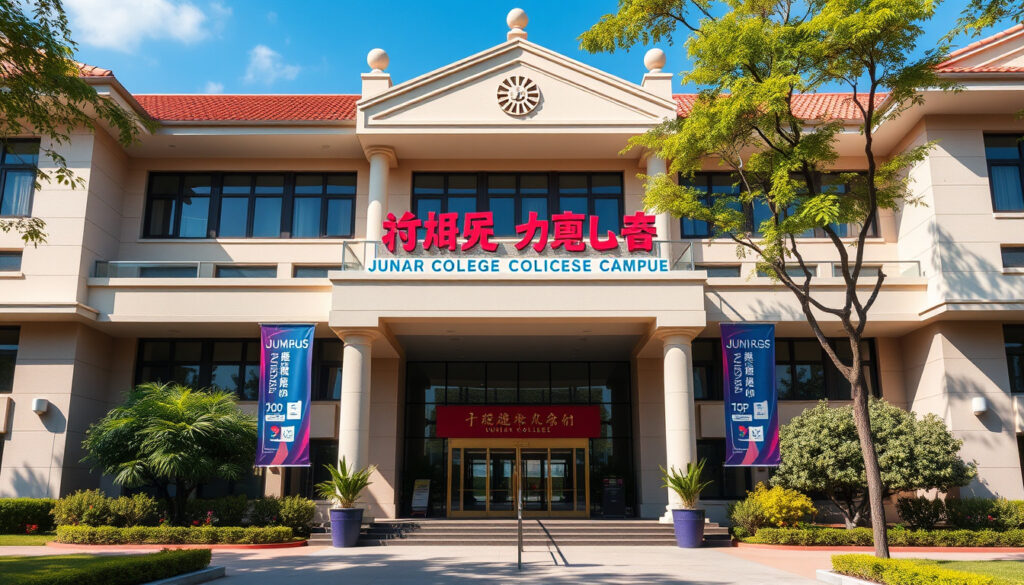
Anglo Chinese Junior College: ACJC Guide to Rankings & Admissions
ACJC is one of Singapore’s most sought-after junior colleges. The school has built its reputation over nearly five decades on academic rigour and values that shape daily campus life.
Established: 1977 · Location: Dover, Queenstown, Singapore · Affiliation: Methodist Institution · Course Offered: Pre-University GCE A-Level · Part of: Anglo-Chinese School family
Quick snapshot
- Founded 1977 (SG Schooling)
- West-region JC in Singapore (Indigo Education)
- GCE A-Level pre-university programme (ACJC Official)
- 2026 JAE official cut-offs not yet publicly released at time of writing
- Exact tuition fees not publicly stated on official site
- Current principal’s name pending verification from official records
- MOE announced 2028 JAE shift from L1R5 to L1R4 on 6 March 2025 (MOE)
- 2027 O-Level cohort will be first affected by 2028 policy change (Zenith Education)
- 2028 JAE implements stricter L1R4 ≤16 across five subjects
- Bonus points cap drops from 4 to 3 points
- Students finishing Secondary 4 in 2027 must meet new aggregate requirements
The table below consolidates core details about ACJC drawn from official records.
| Field | Value |
|---|---|
| Full Name | Anglo-Chinese Junior College (ACJC) |
| Website | acjc.moe.edu.sg |
| Founded | 1977 |
| Type | Junior College |
| Location | 121 Dover Road, Singapore |
| Region | West |
| Affiliation | Methodist Institution |
| Programme | GCE A-Level (Pre-University) |
Is Anglo-Chinese School a top school?
ACJC sits within the broader Anglo-Chinese School family, one of Singapore’s most recognised educational institutions. The junior college arm, established in 1977, carries the same Methodist-rooted values that have defined the ACS name for over 130 years. Being part of this network isn’t just a badge — it shapes the culture, the expectations, and the support systems students encounter on campus.
Rankings and comparisons
When people talk about “top” schools, cut-off points often drive the conversation. For the 2026 Joint Admissions Exercise (JAE), ACJC’s Science stream cut-off sits at 7, placing it below Hwa Chong Institution (HCI) at 5 and above River Valley High School at 8 in the West region. Those numbers reflect a pattern: ACJC consistently attracts students with strong O-Level results, and competition for places remains high. According to Indigo Education’s compiled 2026 data, the college draws from a competitive pool who cleared six O-Level subjects with an L1R5 aggregate that left room for only a handful of bonus points.
The data also shows that ACJC’s Science cut-off has held steady in the 2–8 range across recent years. Historical records from SG Schooling show 2023 Science at 2–8 and Arts at 4–9, while 2024 shifted Arts down to 2–9. These ranges reflect not just academic standards but also the capacity constraints each JC manages annually.
What the rankings can’t capture is the softer side — the mentorship culture, the Christian principles woven into daily life, the way the school approaches holistic education. Those intangibles are harder to measure but deeply felt by students who go through the programme.
ACJC earns its “top school” label through a combination of consistent admissions competitiveness and the broader Anglo-Chinese School legacy. For students who align with that ethos, the college offers a structured environment built around academic expectations and values-based community.
“Committed to an all-round education of the highest standards based on Christian principles.”
What schools are affiliated to ACJC?
ACJC doesn’t operate in isolation — it’s the junior college arm of a broader school network. The Anglo-Chinese School family includes several institutions, each feeding into the JC pathway. Understanding these connections helps families map out long-term educational planning.
Anglo-Chinese School connections
The flagship Anglo-Chinese School (Independent) is a separate institution with its own identity and, notably, an International Baccalaureate (IB) programme alongside A-Levels. ACS (Independent) draws students who pass its own entrance test, creating a parallel but distinct intake compared to ACJC. The two institutions share the Methodist foundation and the ACS crest, but their admissions processes operate independently.
Secondary school links
Beyond the JC level, affiliated secondary schools feed students who meet ACJC’s cut-off requirements through the Joint Admissions Exercise. While the specific list of affiliated primary and secondary schools isn’t publicly enumerated in a single document, the broader ACS family includes schools across different admission routes. Students coming from ACS-affiliated secondaries often report familiarity with the values and expectations that carry through to JC level.
The connection matters because it shapes the community students enter — a network of alumni, shared traditions, and a coherent educational philosophy that spans years rather than just the two-year JC stint.
Students applying from non-affiliated secondary schools enter the same JAE pool as those from ACS schools. Admission to ACJC depends solely on L1R5 aggregate, not feeder school status. The Methodist connection influences culture rather than admissions advantage.
Is it hard to get into ACJC?
The honest answer: yes, getting into ACJC is competitive. The 2026 JAE Science cut-off of 7 puts it among the more selective JCs in the West region. But “hard” is relative — what matters is understanding exactly what the numbers mean and how the system works.
Cut-off points
The current admission framework uses the L1R5 aggregate, which combines English (the compulsory L1) with five relevant subjects across Science and Humanities tracks. The Ministry of Education sets a maximum gross aggregate of 20, meaning students need to stay within that ceiling before bonus points apply. ACJC’s cut-off of 7 for Science stream in 2026 reflects the last admitted student’s aggregate — not a fixed threshold the school sets, but a result of demand and capacity.
Here’s how bonus points factor in: students can claim up to 4 points currently, subtracted from the gross L1R5 to arrive at the net aggregate used for posting. These bonus points come from things like CCA achievements, national service records, and certain elective programmes. The system means a student with a gross 20 might end up with a net 16 after bonuses — which could be the difference between making the cut or falling short.
Admissions competitiveness
From 2028 JAE onwards, the rules shift. The MOE’s announced changes will require L1R4 ≤ 16 across just five subjects instead of six, and the bonus points cap will lower from 4 to 3. This makes the hurdle slightly steeper for students aiming for competitive JCs like ACJC.
Students taking the Chinese/Malay/Tamil Language Elective Programme get an extra edge — they can earn 2 bonus points beyond the standard cap, which can be strategically significant for borderline applicants.
The implication is clear: students aiming for ACJC should treat the O-Level results as the primary gatekeeper. The closer to bare minimum results you present, the less room you have for the system to work in your favour.
Cut-offs fluctuate year to year based on demand, not school-set standards. A cut-off of 7 in 2026 doesn’t guarantee the same threshold in 2027. Students should aim for the lowest aggregate possible — the lower the number, the safer the position in the posting queue.
“MOE will revise the JC admission criteria from the 2028 Joint Admissions Exercise (JAE), by reducing the number of subjects required for JC admission.”
Is ACJC a religious school?
ACJC is unapologetically rooted in Christian principles, even though the student body isn’t exclusively Christian. The school describes itself as committed to “an all-round education of the highest standards based on Christian principles,” which shapes everything from the pastoral care system to the way community service is framed.
Methodist commitment
The Methodist Institution affiliation means ACJC draws from a tradition that prioritises intellectual rigour alongside service and moral formation. This isn’t tokenism — the Christian foundation is woven into the daily rhythm of the school. Morning assemblies, CCA values discussions, and the pastoral structure all carry echoes of that tradition, even if they don’t dominate the academic programme.
Vision and values
For students from non-Christian backgrounds, the environment may feel different, but it isn’t exclusionary. The school doesn’t require Christian faith as a condition of admission, and students of all backgrounds are welcomed into the community. What changes is the lens through which certain values — service, humility, integrity — get expressed and reinforced.
The trade-off is real: some students thrive in a values-centric environment, while others find it less relevant to their personal identity. If you’re evaluating whether ACJC is the right fit, the religious dimension is worth sitting with honestly rather than dismissing as peripheral.
The Methodist ethos shapes daily life at ACJC more than most prospective students realise. For families for whom faith-based education is important, this is a feature. For those for whom it’s neutral, it still shapes the culture and character of the community in ways worth factoring into the decision.
What is better, poly or JC?
This question sits underneath many JC decisions, and ACJC isn’t exempt from it. The JC pathway — and ACJC in particular — serves students headed toward university degrees, typically in fields that benefit from A-Level preparation. Poly, by contrast, is a more applied route that can lead directly to diplomas and specific career tracks.
ACJC vs polytechnic paths
The pre-university route at ACJC is built around A-Level examinations, which remain the traditional gateway to local and international university programmes, particularly those in medicine, law, engineering, and the sciences. Students at ACJC complete two years focused on a narrower set of subjects — typically three to four A-Level subjects alongside general paper or other complementary courses.
A polytechnic diploma, by contrast, spans three years, offers practical, industry-aligned training, and often includes internship components. Graduates can enter the workforce directly or proceed to university via a different admissions route. The financial and time investments differ significantly: JC is two years, poly is three, and each leads to different university entry pathways.
The comparison isn’t really about which is “better” — it’s about which fits the student’s learning style, career aspirations, and circumstances. Students who thrive in exam-focused, academic environments and have a clear university target often find JC the right fit. Those who prefer applied learning and want to build a portfolio may find poly more aligned with their goals.
JC compresses two years of pre-university preparation into an intensive academic sprint, ending with A-Levels. Poly trades that intensity for breadth and practical experience. Neither path is superior — the right choice depends entirely on how a student learns best and what they want from their post-secondary years.
learnerslodge.com.sg, eclatinstitute.sg, illum.education, learnerslodge.com.sg, sunnycitykids.com, jcpcme.com, sgschoolkaki.com
Frequently asked questions
Where is Anglo-Chinese Junior College located?
ACJC is located at 121 Dover Road, Singapore 139650, in the West region of Singapore near the Dover MRT station.
What is Anglo Chinese Junior College tuition fee?
ACJC is a government-funded Junior College under the Ministry of Education. School fees are subsidised and set at MOE’s published rates. Exact current fees are available through the official ACJC website or the MOE general fee schedule for pre-university institutions.
Is Anglo-Chinese Junior College independent?
ACJC is a government JC, not an independent one. It operates under MOE funding and follows national curriculum standards. The separate Anglo-Chinese School (Independent) is a distinct institution with independent school status and an IB option.
What is Anglo Chinese Junior College ranking?
ACJC consistently ranks among the more selective JCs in Singapore based on JAE cut-off points. For 2026 Science stream, the cut-off of 7 places it among the top-tier West-region JCs, below HCI (5) but above peers like River Valley High School (8).
Who is Anglo Chinese Junior College principal?
The current principal’s name should be confirmed directly through ACJC’s official website at acjc.moe.edu.sg, as leadership information is subject to change and the most accurate source is the institution itself.
What courses does Anglo-Chinese Junior College offer?
ACJC offers the GCE A-Level pre-university programme across Science and Arts streams. Students choose combinations of A-Level subjects aligned with their university intentions. The college also provides academic counselling and introductory university preparation support.
Does Anglo-Chinese Junior College have open house photos?
ACJC holds open house events for prospective students, typically around the JAE period. Specific dates and photo galleries are published on the official ACJC website. Contact the school directly for the most current information on upcoming events.
Related reading
- Student Monthly Concession Pass
- ITE School Holiday 2026
- MOE JC Admission Criteria (Official Policy)
- ACJC Admissions (Official)
- JC Cut-Off Points Data (Indigo Education)
More related posts
 Air India Crash Survivor – Flight 1344 Escape Accounts
 Where to Buy CashCard in Singapore: 7-Eleven, Online & More
 Katy Perry Justin Trudeau: Dating Rumors Fact-Checked
 India Rupee to SGD: Live Rate, Conversion & Travel Guide
 Live Up to Your Name: Plot, Where to Watch, Cast & Ending
 7 Warning Signs of Dengue Fever: Spot Early – CDC Guide
 1000 SGD to Won: Live Rate & What It Buys in Korea
 Weak Hero Class 2 Cast: All Actors & Characters (Netflix 2025)
